
A timber deck that feels slightly soft, a skirting board that sounds hollow when tapped, or a thin line of mud near a pipe can be easy to dismiss. In Terrigal, those small clues can point to termite activity well before obvious damage appears. A professional Termite Inspection Terrigal property owners arrange early can identify concealed risks and give you a practical plan to protect your home, budget, and peace of mind.
Termites do not need a neglected house to cause trouble. They can enter through tiny gaps around plumbing, construction joints, garden beds built against walls, and concealed areas below floors. Coastal humidity, established gardens, timber features, and a mix of older and newer homes mean Terrigal properties need regular, property-specific termite attention.
Why Terrigal homes are exposed to termite risk
Terrigal and nearby Wamberal, Avoca Beach, Erina, Kincumber, and Gosford have many properties with landscaping, retaining walls, subfloors, decks, and timber fences close to the home. These features are not automatically a termite problem. However, they can create moisture, shelter, or concealed access where conditions are favorable.
Termites are after cellulose, the material found in timber, cardboard, paper, and some building products. They usually travel from the soil into a structure through protected routes. Because they avoid open air and light, homeowners often do not see them until they have already worked inside a wall, floor, roof void, or built-in cabinet.
Rainfall, drainage, ventilation, and construction style all influence the risk. A brick veneer home on a slab has different possible entry points from an older home with a timber subfloor. A thorough inspection considers those differences rather than relying on one quick look around the outside.
What a Termite Inspection Terrigal service should check
A proper termite inspection is more than looking for insects. It is a detailed visual assessment of accessible areas, focused on current termite activity, evidence of past activity, damage that may need further investigation, and conditions that make termite entry more likely.
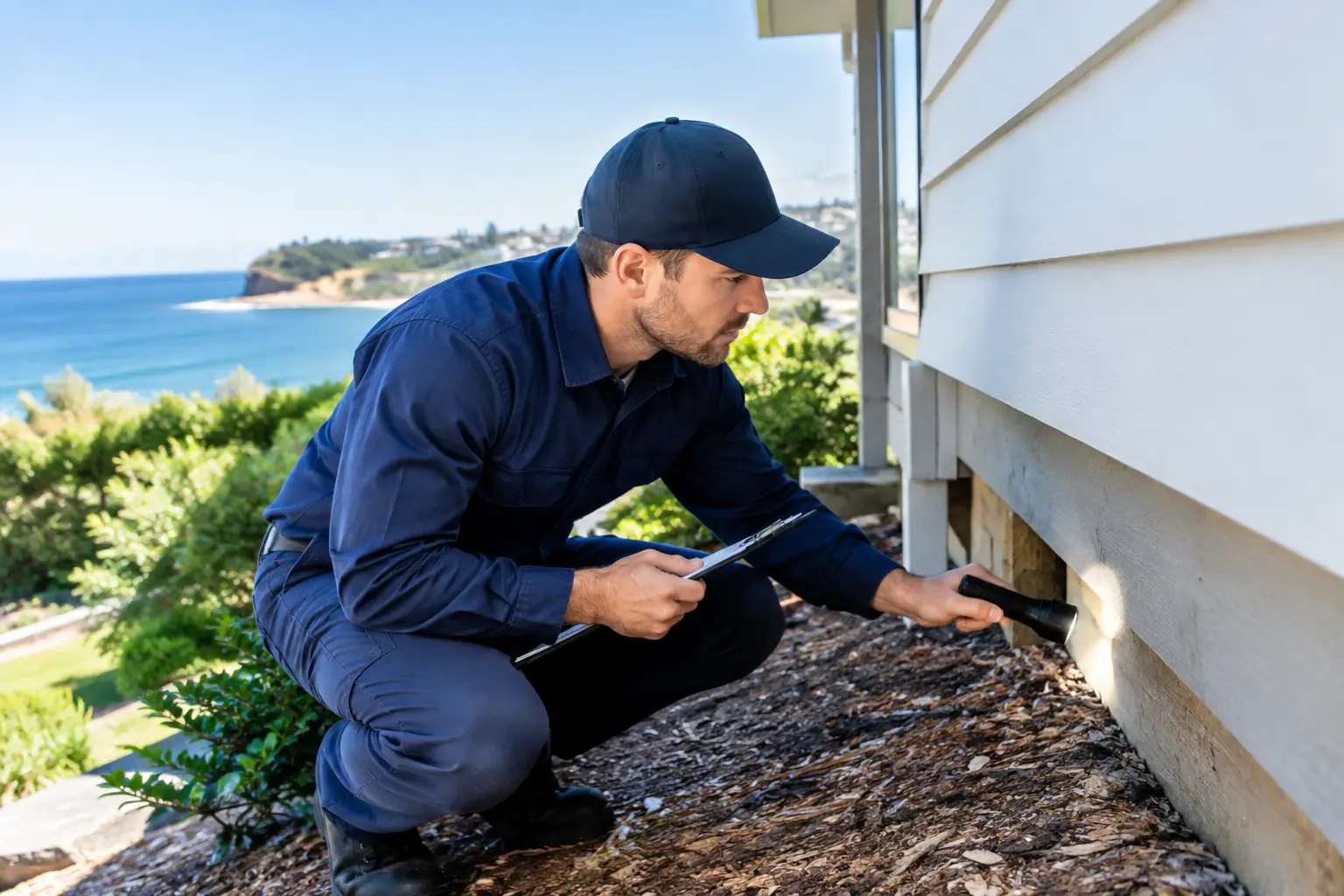
Licensed technicians inspect accessible external walls, weep holes, garden edges, fences, decks, roof voids, garages, internal timber, wet areas, and subfloors where available. They may use specialist equipment to help assess areas that show suspicious readings or sounds. Equipment supports the inspection, but it does not remove the need for careful visual work and sound professional judgment.
| What may be found | What it can indicate | Best next step |
|---|---|---|
| Mud tubes on brickwork, piers, or timbers | Protected termite travel route | Leave undisturbed and arrange an inspection promptly |
| Hollow-sounding timber or blistered paint | Possible concealed timber damage | Have the affected area professionally assessed |
| Moisture near bathrooms, downpipes, or subfloors | Conditions that may support termite activity | Repair the moisture source and improve drainage |
| Timber, cardboard, or mulch against the house | Concealed access and food sources close to the building | Increase separation and keep inspection zones visible |
An inspection report should clearly explain what was accessible, what was observed, areas that could not be inspected, and recommendations suited to the property. No visual inspection can see through every wall or beneath every fixed surface, so clear reporting matters. It helps you understand both the findings and the limits of the assessment.
Signs homeowners should take seriously
Visible termites are only one possible sign. Some homeowners notice a door that suddenly sticks, a tiled area that sounds different underfoot, or a painted surface that appears rippled. These symptoms can have other causes, including moisture damage or building movement, but they deserve investigation when they occur alongside other warning signs.
Flying termites, often called swarmers, can also be alarming. A swarm may mean a mature colony is nearby, but the insects can come from a tree, a fence, or a neighboring property rather than your house. Keep a sample if possible and arrange identification instead of assuming the source.
Inspection, treatment, and prevention are different jobs
An inspection identifies evidence, risks, and accessible conditions. It does not automatically mean a treatment is needed. If active termites are found, the appropriate response depends on the species, location, extent of activity, construction type, previous termite management, and whether the colony can be targeted safely.
Possible professional options can include a monitored baiting system, a localized treatment, a chemical soil barrier, or refilling an existing reticulation system where suitable. There is no one treatment that fits every Terrigal property. The goal is to manage the active problem and reduce the chance of concealed re-entry, not to choose a method based on a quick assumption.
Any pesticide product must be used in line with its approved label directions and applicable NSW requirements. Ask for a clear explanation of the proposed work, what areas are involved, any preparation needed, and how ongoing monitoring or maintenance will be handled.
Simple changes that make inspections easier
Good prevention does not replace professional inspections, but it can reduce favorable conditions and make warning signs easier to spot. Keep weep holes and slab edges visible where practical. Avoid piling mulch, soil, stored timber, or pot plants against exterior walls. Direct roof water away from the building and repair leaking taps, drains, and plumbing as soon as possible.
Underfloor ventilation is another common issue on Central Coast homes. Blocked vents and damp subfloors can create the moisture termites favor while limiting access for inspection. Clearing vents, improving drainage, and ensuring technicians can safely reach accessible areas can make a meaningful difference.
For landlords, strata managers, and investors, records are especially useful. Keep inspection reports, treatment documents, repair invoices, and notes about any building changes. When a tenant reports a moisture issue or a damaged skirting board, acting early protects the property and gives everyone clearer information.
When should you book an inspection?
Annual termite inspections are a sensible starting point for many Central Coast homes, though some properties may need a different schedule based on their construction, history, surrounding environment, and existing termite management system. Properties with prior termite activity, concealed subfloors, dense vegetation, or known moisture concerns may benefit from closer monitoring.
A pre-purchase timber pest inspection is also worth arranging before committing to a property in Terrigal, Woy Woy, Umina Beach, Ettalong Beach, Bateau Bay, The Entrance, Tuggerah, Toukley, Kariong, Wyong, or surrounding suburbs. It is separate from a standard building inspection and focuses on timber pests and conducive conditions. If the report identifies concerns, you can seek advice before the purchase becomes your responsibility.
Frequently asked questions
Can termites damage a brick home?
Yes. Termites do not eat brick, but they can travel through cracks, service penetrations, slab edges, and wall cavities to reach timber framing, flooring, cabinetry, and other materials inside the home.
Are termite inspections disruptive?
Most inspections are straightforward and non-destructive. The technician needs access to relevant areas, including the roof void, subfloor, garage, and perimeter where safe and practical. If a concealed area needs further investigation, that should be discussed before any additional work occurs.
Can I wait until I see termites?
Waiting is risky because termites often stay concealed. The earlier activity or conducive conditions are identified, the more options you may have to address the issue before damage becomes extensive.
If something around your Terrigal property does not look right, treat it as a reason to get informed rather than a reason to panic. A careful termite inspection gives you clear facts, practical recommendations, and the chance to act before a hidden problem becomes a costly repair.