
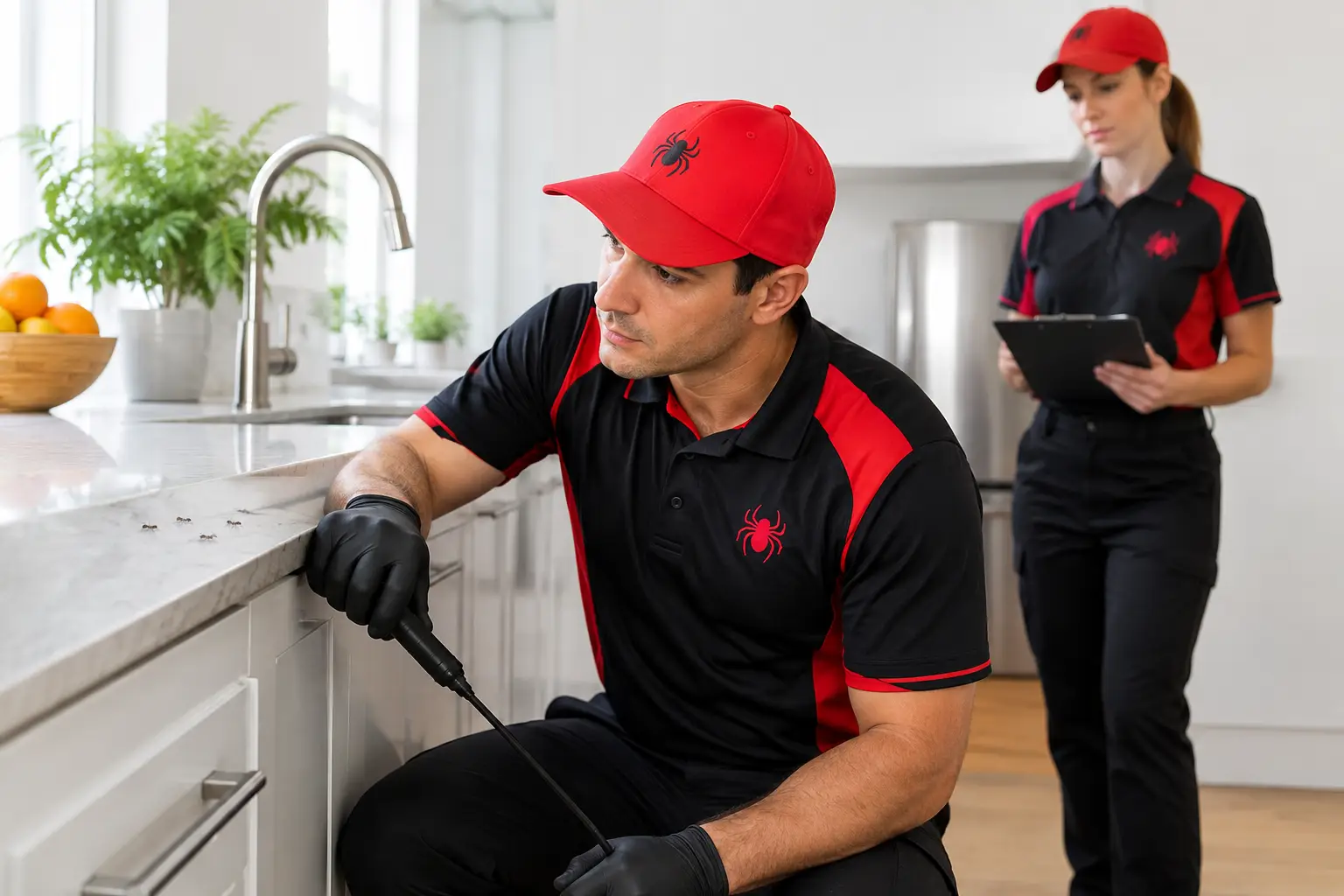
Finding a line of ants moving from beneath the dishwasher to the sugar jar can make a clean kitchen feel instantly unhygienic. Knowing how to get rid of ants in kitchen areas starts with more than spraying the insects you can see. Those ants are usually foragers, sent out from a nest to find water and food for the colony. Remove the trail without addressing the colony, and another trail may appear tomorrow.
On the Central Coast, warm weather, humidity, coastal conditions, pet food, crumbs, leaking plumbing, and easy access through gaps around pipes can all make kitchens attractive to ants. The right solution depends on where they are entering, what is drawing them in, and whether the activity is limited to one room or spreading through the property.
Start by Finding What Is Attracting the Ants
Ants are not appearing at random. Most kitchen infestations are driven by a reliable source of food, moisture, or both. Sweet spills are a common trigger, but grease residue under appliances, open pantry goods, unwashed recyclables, and pet bowls can be just as appealing.
Watch the trail for several minutes before cleaning it away. It may lead to a crack at the backsplash, a window frame, a gap around plumbing beneath the sink, a pantry corner, or an external wall. In homes around Terrigal, Erina, and Wamberal, ants can also travel in from gardens, mulch beds, paving, or vegetation touching the building.
How to Get Rid of Ants in Kitchen Areas Step by Step
Clean the trail and remove food sources
Use warm, soapy water to clean benchtops, cabinet fronts, floors, and the route the ants have been using. This helps remove the chemical scent trail that guides other workers to the food source. Pay particular attention to under the toaster, microwave, refrigerator, stove, and coffee machine, where food particles often collect unnoticed.
Store sugar, cereal, flour, snacks, and pet food in sealed containers. Empty indoor garbage regularly, rinse cans and bottles before placing them in recycling, and avoid leaving dirty dishes overnight. If a pet bowl must remain out, clean the surrounding floor and remove leftover food after meals.
Reduce moisture around sinks and appliances
Many ant species need dependable water, especially during hot or dry periods. Dry the sink after use, repair dripping taps, and look inside the cabinet below the sink for damp timber, water staining, or a slow pipe leak. Check refrigerator drip trays and dishwasher connections as well.
Moisture is not just an ant issue. Ongoing leaks can encourage other pests and contribute to timber deterioration. If ants are active around a damp wall, skirting board, or cupboard, do not assume the problem is only food-related.
Use bait correctly, not just surface spray
For a small, established trail, an ant bait can be more effective than immediately spraying every visible ant. Worker ants carry suitable bait back to the colony, where it may reach other workers and the queen. The process is not always instant, which is why patience matters.
Place bait close to the active trail but away from food preparation surfaces, children, and pets. Follow the product label exactly. Do not spray insecticide directly around the bait station, since this can repel ants before they collect the bait. If activity increases briefly after bait placement, it can mean ants have found the food source.
| What you see | Likely issue | Best next action |
|---|---|---|
| A narrow trail to crumbs or sugar | Foraging workers have found food | Clean thoroughly and place bait near the trail |
| Ants around the sink or dishwasher | Moisture or a plumbing gap | Dry the area and inspect for leaks or entry points |
| Ants return after repeated cleaning | The nest remains active nearby | Arrange professional identification and treatment |
| Winged insects or ants from walls | Potential nesting activity inside the structure | Seek prompt pest advice and assess the property |
Why Ants Keep Returning After DIY Treatment
Sprays can give quick visual relief, but they often only kill the workers currently on the surface. Ant colonies can have many workers and may be nesting outdoors, in wall voids, beneath paving, in roof spaces, or under slabs. Some species also establish satellite nests, making the problem harder to resolve with a single treatment.
Ant behavior changes with weather and food availability. A colony that ignores one bait may respond to another type when its needs shift. This is one reason a professional assessment can save time when ants keep appearing in the same kitchen, particularly in rental properties, strata complexes, cafes, and commercial food areas.
For businesses in places such as Gosford, Tuggerah, The Entrance, or Wyong, ant activity should be addressed before it becomes a hygiene concern for staff or customers. Food premises often need a documented and practical pest management approach that addresses sanitation, access points, monitoring, and treatment rather than relying on a can of spray in the storeroom.
Seal Entry Points After Activity Has Reduced
Once the active trail has been cleaned and baiting or treatment is underway, reduce future access. Seal small gaps around pipes, utility lines, window frames, and baseboards with an appropriate sealant. Repair damaged fly screens and weather stripping, and make sure doors close tightly.
Outside, keep mulch, leaf litter, timber, and dense groundcover from sitting directly against exterior walls. Trim branches or plants that touch the roofline or windows. These changes will not eliminate every ant colony in the yard, nor should they, but they make it harder for ants to use the building as a regular food stop.
When to Call a Professional for Kitchen Ants
It is time to arrange professional ant control if trails return for more than a week, ants are emerging from cabinetry or wall gaps, bait has not improved activity, or there are large numbers near food storage. Prompt help is especially sensible where young children, pets, allergy concerns, tenants, customers, or food safety obligations affect which treatment options are suitable.
A licensed technician can identify likely nesting areas, select a treatment approach suited to the ant species and property, and advise on the moisture, sanitation, or exclusion work that supports lasting control. Redback Pest Control Central Coast provides practical ant treatment recommendations for homes, rental properties, strata sites, and businesses across the region.
Do not let a recurring ant trail become part of the daily kitchen routine. Clean the food source, remove the scent trail, use bait carefully where appropriate, and get experienced help when the colony refuses to stay gone. Protect your kitchen, protect your budget, and enjoy your home without ants on the counter.