

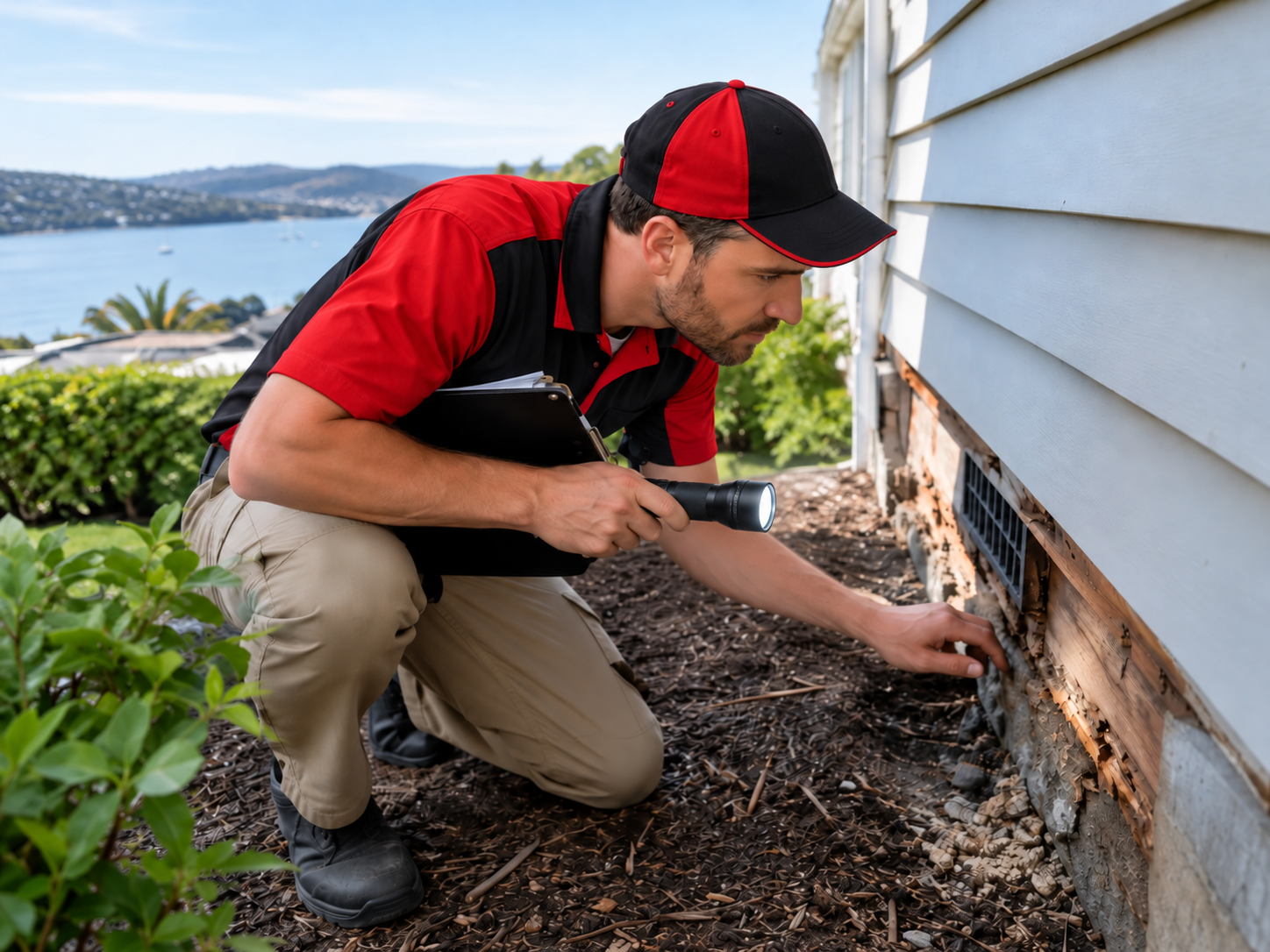
That attractive Gosford home can look spotless at an open inspection while termites are working quietly inside a wall, beneath a floor, or behind stored items. A pre purchase termite inspection Gosford buyers arrange before committing can identify evidence of termite activity, conditions that attract termites, and visible timber damage that may affect the property’s value and your repair budget.
On the Central Coast, warm weather, coastal moisture, established gardens, timber retaining walls, and older homes with concealed subfloors can all create favorable termite conditions. Whether you are buying in East Gosford, Narara, Wyoming, or closer to Kariong, the right inspection gives you practical information before the settlement date – not an unpleasant surprise afterward.
Why a Pre Purchase Termite Inspection in Gosford Matters
Termites do not need a dramatic entry point. They can travel from soil into a building through concealed cracks, service penetrations, slab edges, timber garden structures, and damp areas around plumbing. By the time hollow-sounding timber, bubbling paint, or a sagging door frame becomes obvious, damage may already be extensive.
A standard building inspection and a timber pest inspection are not always the same service. Building reports focus on the property’s general condition, while a dedicated timber pest inspection looks specifically for termites, termite damage, borers, fungal decay, and the environmental conditions that increase risk. Buyers should confirm exactly what is included rather than assume one report covers everything.
For a family purchasing a first home or an investor comparing properties around Gosford and Erina, this information can support a more informed decision. Depending on the findings and your contract conditions, you may seek further advice, negotiate on price, request access for additional investigation, or decide the risk is not acceptable. The purpose is not to create panic. It is to protect your property decision with clear evidence.
What the Inspection Checks
A licensed technician works methodically through accessible parts of the home and surrounding grounds. This usually includes the interior, roof void where safe access is available, subfloor, exterior walls, garage, fences close to the structure, garden timbers, and accessible trees or stumps. The technician is looking for current termite activity, old damage, mud leads, shelter tubes, moisture issues, and areas where the termite management system cannot be seen or has been bridged.
Specialist equipment can assist the inspection, but it does not replace experience or physical access. Moisture meters may help identify wet areas that deserve closer attention, while sounding timber can reveal changes behind a painted surface. If suspicious activity is found, the report should explain where it was seen, the apparent extent of accessible damage, and the next recommended action.
| Finding or condition | What it may mean for a buyer |
|---|---|
| Mud tubes on brickwork, piers, or retaining walls | Possible concealed termite travel route that needs prompt professional assessment. |
| Soft, hollow, or damaged timber | Could indicate termite damage, borer activity, or moisture-related decay. Further investigation may be needed. |
| Poor drainage or leaking plumbing | Excess moisture can make the area more attractive to termites and contribute to timber deterioration. |
| Timber, mulch, or garden beds against the house | May conceal termite entry points or bridge inspection zones around the building perimeter. |
Access limitations should never be ignored
Stored boxes in a garage, insulation in a tight roof void, low-clearance subfloors, locked rooms, furniture against walls, and dense vegetation can all limit what can be inspected. This is common in occupied homes and does not automatically make a property unsafe. It does mean a buyer should read the limitations carefully and consider whether a return visit, additional access, or specialist investigation is sensible before settlement.
Good reporting is clear about what was inspected, what could not be inspected, and why. That clarity is especially valuable in older weatherboard homes, homes with additions, and properties on sloping blocks around North Gosford, Springfield, and Point Clare, where construction details can vary considerably.
What to Do If Termite Evidence Is Found
Do not disturb suspected termites, break open damaged timber, spray household insecticide, or pull down mud tubes. Those actions can cause termites to retreat and make professional assessment more difficult. Photograph the area if practical, keep people away from it, and arrange a termite specialist to assess the activity.
The next step depends on whether termites are active, whether damage appears old or recent, the construction type, and how much of the building can be accessed. Treatment may involve a targeted chemical treatment, baiting and monitoring, a soil management system, or a combination of methods. There is no single treatment that suits every Gosford property. The best approach should address the colony risk, entry points, moisture conditions, and future monitoring needs.
If you are still within the purchase process, ask for the report early enough to act on it. Your conveyancer can advise you on the contract side, while a termite professional can explain the pest findings and likely treatment pathway. For ongoing protection after purchase, speak with the Redback Pest Control Central Coast team about practical inspection and termite management options for your property.
Questions to Ask Before You Book
Before arranging an inspection, ask whether the report covers termites as well as timber borers and fungal decay, whether the roof void and subfloor will be checked if accessible, and when you will receive the written findings. You should also ask the selling agent to ensure access is available to garages, outbuildings, meter boxes, roof spaces, and underfloor areas wherever possible.
Price matters, but the cheapest report is not always the best value if major areas are excluded or the findings are vague. Look for a thorough process, clear photographs where relevant, plain-language recommendations, and a technician willing to explain what the report means. Buyers in Woy Woy, Umina Beach, Terrigal, and other Central Coast suburbs face different building styles and exposure conditions, so local knowledge is useful when interpreting risk.
A sensible step after settlement
Even when no active termites are found, arrange regular professional inspections after you move in. Termite risk changes with rainfall, landscaping, renovations, drainage problems, and nearby construction. Keep weep holes visible, repair leaks, avoid stacking timber against the house, and maintain a clear inspection zone around external walls. These simple steps make early detection easier.
If you need clear advice before signing, choosing a local termite inspection service can help you understand the property in front of you, the limits of the inspection, and the sensible next move. No worries, no stress, no termites starts with checking before you buy.