
A scratching sound above the ceiling at night, droppings in the pantry, or a chewed cable behind the fridge can turn a small concern into a property problem quickly. To prevent rodents in Woy Woy, homeowners and businesses need to remove the food, water, and shelter that make a building attractive – then close the entry points rodents use to get inside.
Woy Woy properties can be particularly appealing to rats and mice. Older homes, dense vegetation, garages, waterfront conditions, underfloor areas, sheds, and nearby food businesses can all create opportunities for rodent activity. A clean-looking home can still have a rodent issue if there is a gap around a pipe, an open vent, or accessible pet food.
Why rodent prevention matters in Woy Woy
Rodents are not simply an inconvenience. Rats and mice contaminate food preparation areas, leave urine and droppings, damage stored belongings, and gnaw continuously to keep their teeth worn down. That means electrical wiring, appliance cords, insulation, plastic plumbing components, timber, and vehicle wiring can all be at risk.
For landlords, strata managers, cafes, and commercial premises, signs of rodents also require prompt attention because a recurring problem can affect hygiene standards and tenant or customer confidence. Waiting until activity is obvious often makes the job larger. Rodents reproduce quickly when conditions are favorable, especially when a reliable food source and undisturbed nesting area are available.
Start outside: remove food, cover, and access
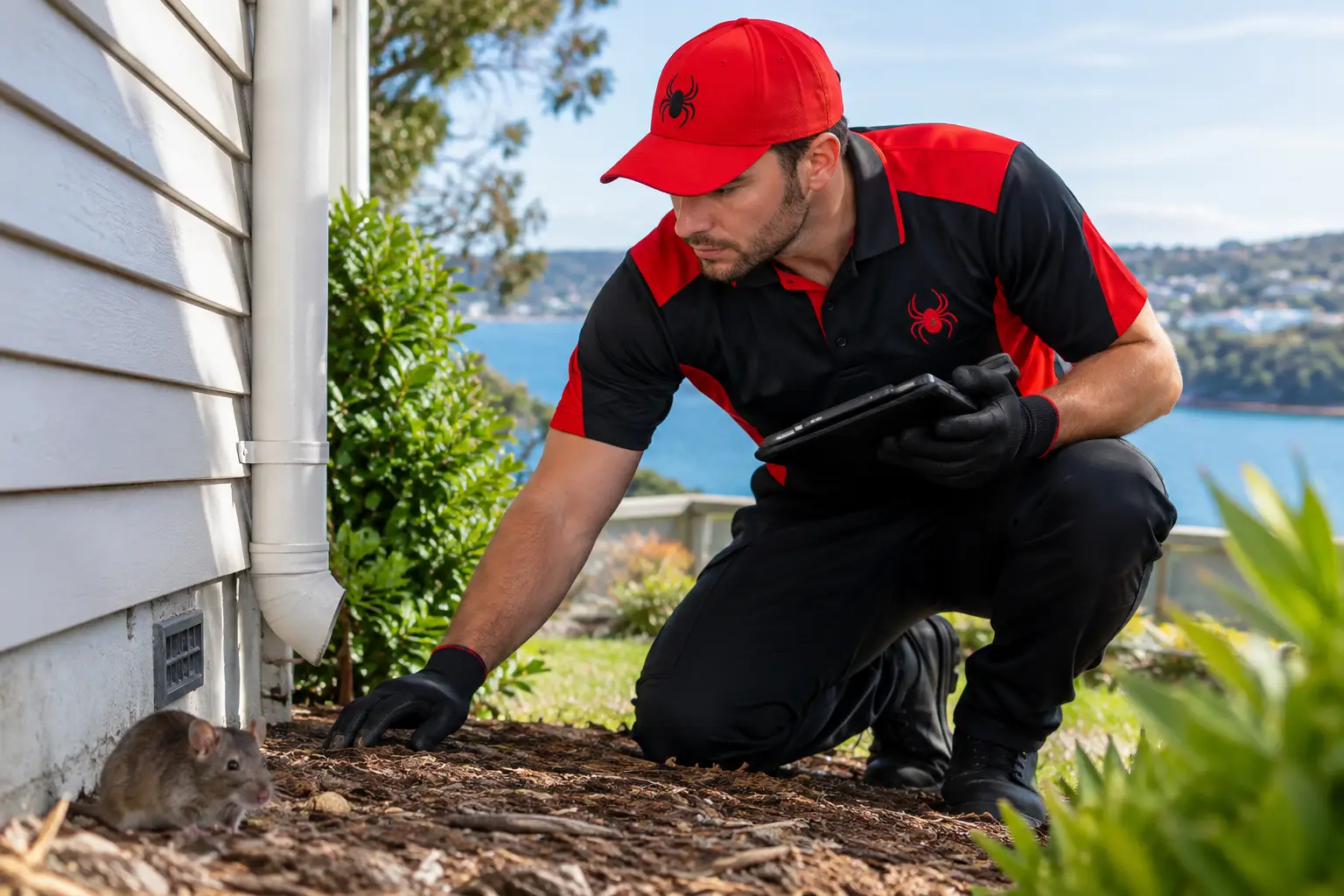
Rodent prevention starts around the building perimeter. A rat can travel along fences, vegetation, utility lines, and stored items before entering through a gap many people would barely notice. Mice can fit through very small openings, so prevention depends on careful inspection rather than a quick walk around the yard.
Manage garbage and outdoor food
Use bins with tight-fitting lids and keep the area around them clean. Rinse food containers where practical, avoid leaving rubbish bags beside the bin, and make sure compost is managed correctly. Fallen fruit, uncovered barbecue drip trays, bird seed, and outdoor pet food are common reasons rodents keep returning to a property.
If you feed pets outside, remove bowls after feeding rather than leaving food available overnight. This is a simple change, but it can make a noticeable difference where rats are moving through yards after dark.
Reduce hiding places near the building
Keep stored materials away from external walls where possible. Timber stacks, cardboard, unused pots, dense groundcover, and cluttered sheds give rodents cover and nesting opportunities. Trim vegetation so branches and shrubs are not resting against the roofline, walls, or air-conditioning equipment.
A tidy yard is not a guarantee against rodents, particularly near busy commercial areas or neighboring properties, but it makes your building less convenient than the alternatives nearby. That is the practical goal of prevention.
Seal the gaps rodents use to enter
Exclusion work is one of the most valuable ways to prevent rodents in Woy Woy homes and businesses. Baits or traps can reduce an active population, but they do not fix the opening that allowed the next rodent inside. Check low-level walls, roof edges, garages, decks, subfloors, and service penetrations carefully.
| Area to inspect | What to look for | Practical action |
|---|---|---|
| Pipe and cable entries | Gaps around plumbing, air-conditioning lines, and cables | Seal with suitable durable materials after checking services are safe |
| Garage doors | Damaged bottom seals or daylight visible under the door | Repair or replace seals and keep the garage free of food storage |
| Vents and weep openings | Damaged screens or openings without appropriate protection | Use suitable screening without obstructing required ventilation or drainage |
| Roof and eaves | Loose sheeting, damaged fascia, or gaps at roof junctions | Arrange repairs before rodents establish a roof-void nest |
Take care around building ventilation, drainage paths, and electrical services. Sealing every visible hole with expanding foam alone is rarely a long-term answer because rodents can chew through it. The right exclusion method depends on the opening, building construction, and whether there is already activity inside.
Keep kitchens, storage areas, and roof spaces less attractive
Inside, store dry goods in hard, sealed containers rather than thin bags or cardboard packaging. Wipe crumbs from benches and under appliances, clean behind the stove and refrigerator, and repair leaking taps or pipework. Water is just as useful to rodents as food, especially during dry periods.
In garages and sheds, lift storage off the floor where possible and avoid long-term piles of cardboard. Inspect rarely used cupboards, holiday supplies, and stored pet food. For businesses, stock rotation and routine cleaning behind equipment are essential. Restaurants, cafes, warehouses, and strata bin rooms need a documented approach because one weak point can support activity across the site.
Know when traps are not enough
A correctly placed trap can help confirm activity or catch an occasional mouse. However, repeated catches, fresh droppings after cleaning, roof noises, or signs in several rooms point to an established problem. This is where a professional inspection is worthwhile.
Licensed technicians can identify likely entry points, distinguish between rat and mouse activity, assess nesting areas, and recommend a treatment plan that fits the property. Depending on the situation, this may include secured bait stations, targeted trapping, follow-up visits, sanitation advice, and exclusion recommendations. Treatment should be planned carefully around children, pets, food areas, wildlife, and the layout of the property.
Do not place loose bait where children, pets, or non-target animals could access it. Avoid relying on strong scents, ultrasonic devices, or a single trap as a substitute for inspection and exclusion. Some measures may have limited use in certain situations, but they do not remove the basic causes of rodent activity.
A practical plan for homes, rentals, and businesses
For a homeowner, a regular exterior check, clean food storage, and fast repairs are usually the foundation of rodent prevention. For a rental property, clear communication matters: tenants should report signs promptly, while owners or managers should address building defects and arrange qualified treatment where required.
For commercial premises and government facilities, prevention works best as an ongoing program rather than a one-off response. Monitoring points, service records, staff reporting, waste management, and building maintenance all need to work together. A warehouse near Tuggerah may have different pressure points from a cafe in Ettalong Beach, but both need the same basics: deny access, remove food and water, and respond before activity spreads.
If you are hearing movement in the ceiling, finding droppings, or noticing new gnaw marks, protect your property and budget by arranging advice early. Redback Pest Control Central Coast can assess the evidence, explain the practical options, and help you move from repeated rodent sightings to a more secure property.