
Termites rarely make their presence obvious until costly damage is already underway. A professional Termite Inspection Central Coast service is designed to find the subtle warning signs – before they become a major repair bill. From damp coastal blocks in Terrigal and Avoca Beach to established homes in Gosford, Wyong, Woy Woy, and Erina, local properties can offer termites the moisture, timber, and hidden access they need.
Protect your property and protect your budget with a thorough inspection from an experienced termite specialist. No worries, no stress, no termites.
Why Central Coast homes need termite inspections
The Central Coast climate creates favorable conditions for subterranean termites. Warm weather, seasonal rain, humid coastal air, garden beds against walls, leaking plumbing, and subfloor moisture can all increase the chance of termite activity. Termites do not need a visible pile of timber in the yard to cause trouble. They can travel underground, enter through tiny gaps around pipes or slab edges, and feed within wall frames, flooring, roof timbers, and cabinetry.
Many homeowners first notice a problem when a skirting board sounds hollow, paint begins to bubble, a door jams unexpectedly, or a timber surface feels soft. By then, termites may have been feeding out of sight for months. A scheduled inspection provides a far better opportunity to detect evidence early and make an informed decision about protection or treatment.
What happens during a Termite Inspection Central Coast service?
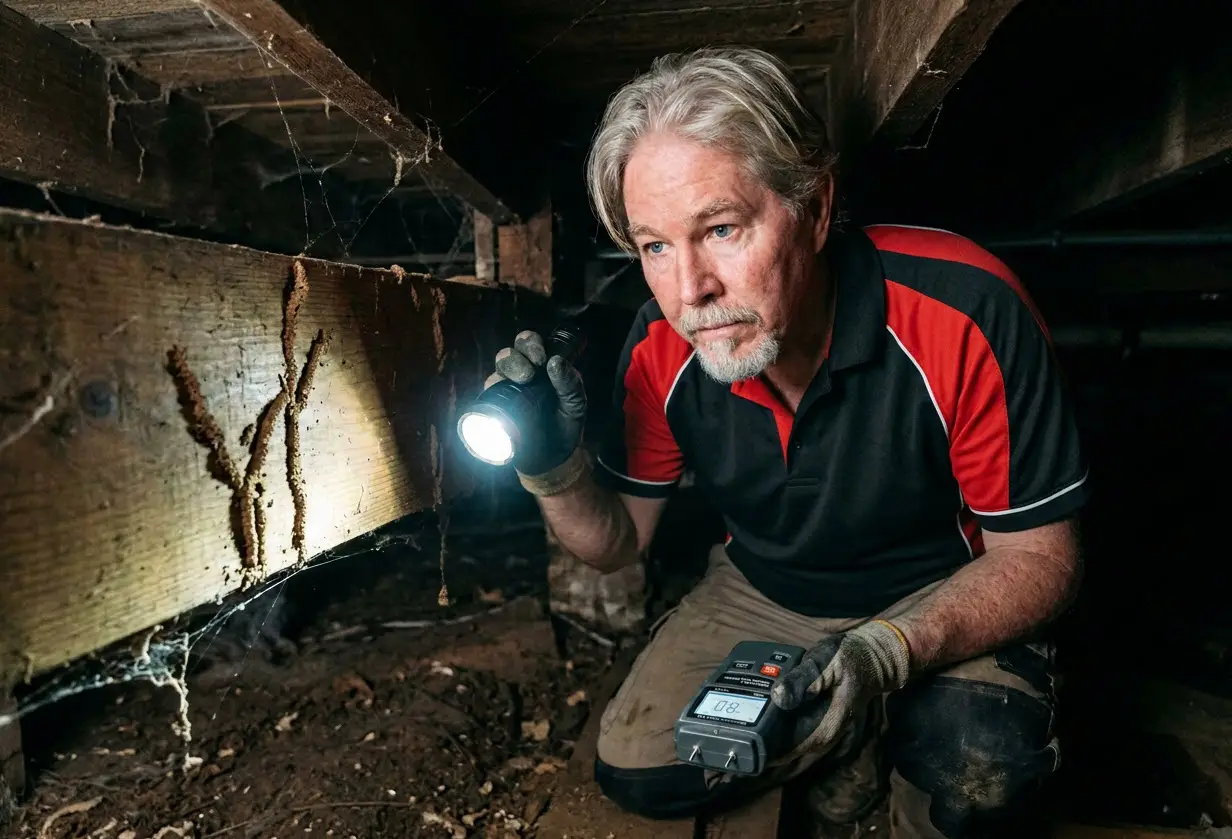
A proper termite inspection is more than a quick walk around the outside of a house. A technician assesses accessible interior areas, the exterior perimeter, subfloor spaces where safe to enter, roof voids where accessible, fences, retaining walls, outbuildings, gardens, and timber items near the structure. The goal is to identify live termites, termite workings, conditions that attract termites, and areas that cannot be fully inspected.
Modern detection equipment can assist where there are suspicious areas, but no inspection can see through every wall, beneath every fixed floor, or behind stored belongings. That is why clear reporting matters. You should know what was inspected, what was found, what risks are present, and what practical next steps are recommended.
Signs a technician may look for
Termite evidence can be small and easy to overlook. Mud shelter tubes are one of the clearest signs. These narrow, earth-colored tunnels allow subterranean termites to travel while staying protected from air and light. A technician may also look for damaged or hollow-sounding timber, soft wall linings, discarded wings after a swarm, frass from drywood termites, moisture issues, and previous treatment systems that need attention.
| Finding or condition | What it can mean | Recommended response |
|---|---|---|
| Mud tubes on walls, piers, or foundations | Possible active subterranean termite travel | Do not disturb the tubes. Arrange an urgent professional assessment. |
| Hollow timber, blistering paint, or sagging trim | Concealed damage or moisture-related deterioration | Inspect promptly to identify the cause before repairs are made. |
| Leaking taps, poor drainage, or damp subfloor areas | Conditions that can encourage termite activity | Repair moisture sources and discuss ongoing termite protection. |
| Timber, mulch, or garden beds against the home | Potential concealed entry points and food sources | Improve clearance and keep inspection zones visible. |
How often should you arrange an inspection?
For most homes, an annual termite inspection is a sensible baseline. Properties with a history of termite activity, dense vegetation, significant moisture, a nearby bushland setting, or known high-risk construction features may need inspections more often. Your technician can recommend an interval based on the home itself rather than applying a one-size-fits-all schedule.
Pre-purchase inspections are also essential. A standard building inspection may identify obvious structural concerns, but a timber pest inspection focuses specifically on termites and other timber pests. Buyers in Kincumber, Umina Beach, Ettalong Beach, Tuggerah, Long Jetty, and surrounding suburbs should arrange this assessment before finalizing a purchase where possible. It is a relatively small cost compared with inheriting hidden termite damage.
Inspection findings: treatment and prevention choices
If live termites are found, avoid spraying household insecticide, pulling apart damaged timber, or knocking down mud tubes. Those actions can disrupt the colony and make its location harder to establish. Professional termite treatment is planned around the species, extent of activity, construction type, access, and any existing protection system.
| Option | Best suited to | Key consideration |
|---|---|---|
| Targeted termite treatment | Confirmed live termite activity | Needs a site-specific plan and follow-up monitoring. |
| Termite baiting system | Properties needing ongoing colony monitoring | Stations require regular professional checks and maintenance. |
| Chemical barrier | Suitable construction types and accessible treatment zones | Coverage depends on the building design and installation access. |
| Reticulation refill | Homes with an existing reticulation system | The system should be assessed before refilling or servicing. |
There is no single termite solution that suits every Central Coast property. A slab-on-ground home in Berkeley Vale may have different entry risks from a raised timber home in Kariong or a strata property near The Entrance. The right recommendation combines immediate control with practical measures that reduce future risk.
Simple ways to reduce termite risk between inspections
Good property maintenance supports professional termite protection. Keep garden mulch and soil below weep holes, direct stormwater away from the building, repair leaking pipes, and avoid storing timber or cardboard against exterior walls. Make subfloor vents and slab edges visible where possible, and do not cover inspection zones with paving, garden features, or stored materials.
These steps reduce conducive conditions, but they do not replace an inspection. Termites can enter through areas that appear neat and well maintained. Regular checks remain the practical way to identify activity before major structural damage develops.
Termite inspections for landlords, strata, and businesses
Termite risk is not limited to family homes. Landlords and property investors need clear reports to support maintenance decisions and protect rental assets. Strata managers may need coordinated inspections across shared grounds, building perimeters, retaining walls, and common areas. Cafes, offices, warehouses, schools, and government facilities also benefit from planned inspections where timber structures, landscaping, or moisture-prone service areas are present.
Redback Pest Control Central Coast provides practical termite advice for residential, commercial, strata, and specialist properties. Experienced technicians explain findings in plain language, identify areas requiring attention, and recommend suitable options without unnecessary pressure.
Frequently asked questions
Can I inspect for termites myself?
You can watch for visible mud tubes, damaged timber, moisture, and discarded wings, but termites commonly remain hidden inside walls, floors, and inaccessible areas. A professional inspection is more thorough and provides documented findings and recommendations.
Are termites more active after rain?
Moisture can create favorable conditions, and swarming activity may be noticed during warm, humid periods. However, termites can remain active at different times of year, so do not wait for a particular season to book an inspection.
What should I do if I find a mud tube?
Leave it in place and arrange a professional inspection as soon as possible. Breaking the tube may cause termites to move elsewhere, while leaving it intact helps the technician assess the evidence and plan the next step.
If something around your home does not look right – a soft skirting board, mud tubing near a wall, unexplained timber damage, or a sudden swarm of winged insects – act early. A professional inspection gives you clear information and a sensible path forward before a small warning sign turns into a large repair.