
Termite Inspection Kincumber / Avoca Beach / Copacabana is not a job to put off until you see obvious damage. By the time paint is bubbling, a door frame feels soft, or timber sounds hollow, termites may have been feeding out of sight for months. Coastal homes, leafy blocks, and properties close to bushland can all provide the moisture, timber, and concealed entry points termites look for.
Why local termite inspections matter
Kincumber, Avoca Beach, and Copacabana each have a mix of established homes, renovations, landscaped gardens, and mature trees. Those features add character, but they can also make termite activity harder to spot. Subterranean termites travel through soil and enclosed spaces, often entering through gaps around plumbing, slab edges, subfloors, retaining walls, or timber stored near the building.
A professional inspection is designed to find the conditions termites use as well as visible evidence of activity. This includes checking accessible roof voids, subfloors, exterior walls, fences close to the home, garden timbers, and likely entry areas. The goal is clear reporting and practical next steps, not unnecessary alarm.
Warning signs homeowners should take seriously
Termites are often called silent destroyers because they generally remain hidden. Still, there are signs worth acting on quickly. Mud tubes along brickwork, piers, retaining walls, or pipes may indicate termites are traveling between the ground and a food source. Small piles of discarded wings near windows or doors can also suggest a termite swarm has occurred nearby.
Inside the home, watch for blistered paint, sagging skirting boards, tight-fitting doors, hollow-sounding timber, or unexplained cracks around architraves. These signs do not always mean termites, but they do justify an inspection. Do not disturb mud tubes or spray suspected termites with household products. This can cause a colony to retreat and make professional assessment more difficult.
What happens during a termite inspection in Kincumber, Avoca Beach, or Copacabana?
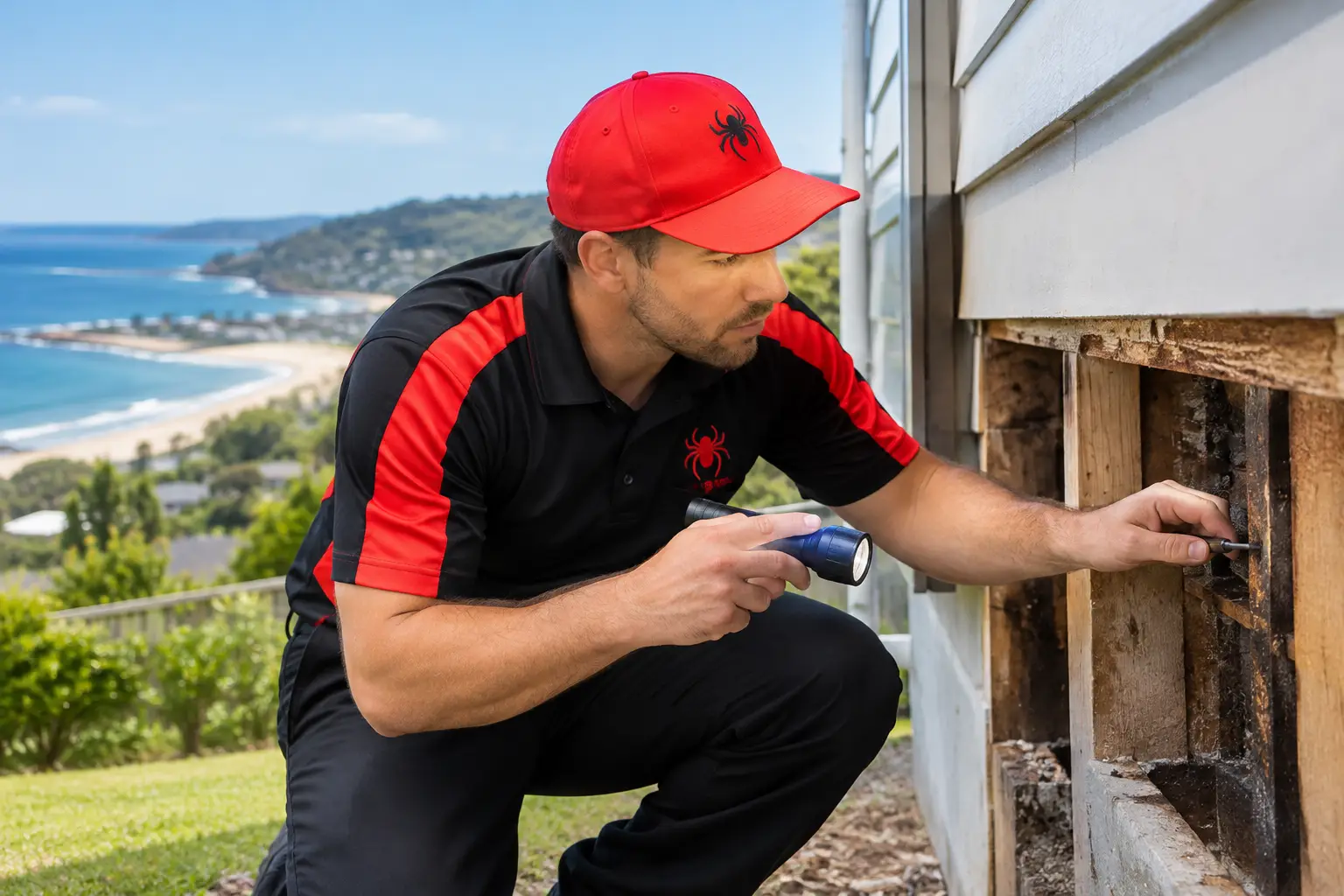
A licensed technician carries out a systematic visual inspection of accessible areas and looks for termite workings, timber damage, moisture issues, and construction details that may increase risk. Specialized equipment may be used where appropriate to help investigate suspect areas without unnecessary damage to walls or flooring.
Afterward, you should receive clear information about what was found, where the risks are, and whether further investigation or treatment is recommended. If active termites are present, treatment options depend on the property, termite species, access, and extent of activity. A baiting program, chemical soil treatment, monitoring stations, or a targeted combination may be appropriate. No two properties have identical conditions, so the right approach starts with an accurate inspection.
When should you book?
Annual termite inspections are a sensible baseline for many Central Coast properties, particularly homes with subfloors, timber features, dense gardens, nearby bushland, or a prior termite history. More frequent checks may be recommended where risk is higher. Buyers should also arrange a dedicated timber pest inspection before committing to a property, rather than relying on a general building report alone.
Landlords, strata managers, and investors can benefit from a planned inspection schedule. It creates a record of inspections, helps identify maintenance concerns early, and supports better long-term property decisions.
Simple ways to reduce termite risk
Good maintenance cannot guarantee a termite-free property, but it can remove common attractants. Keep soil, mulch, and garden beds below weep holes, repair leaking taps and drainage issues, avoid storing timber against the house, and keep subfloor ventilation clear. If you are renovating, make sure termite protection and future inspection access are considered before work is finished.
If you have noticed a suspicious sign or simply want confidence in the condition of your home, arranging an inspection is the practical next move. No worries, no stress, no termites starts with knowing what is happening around your property.