

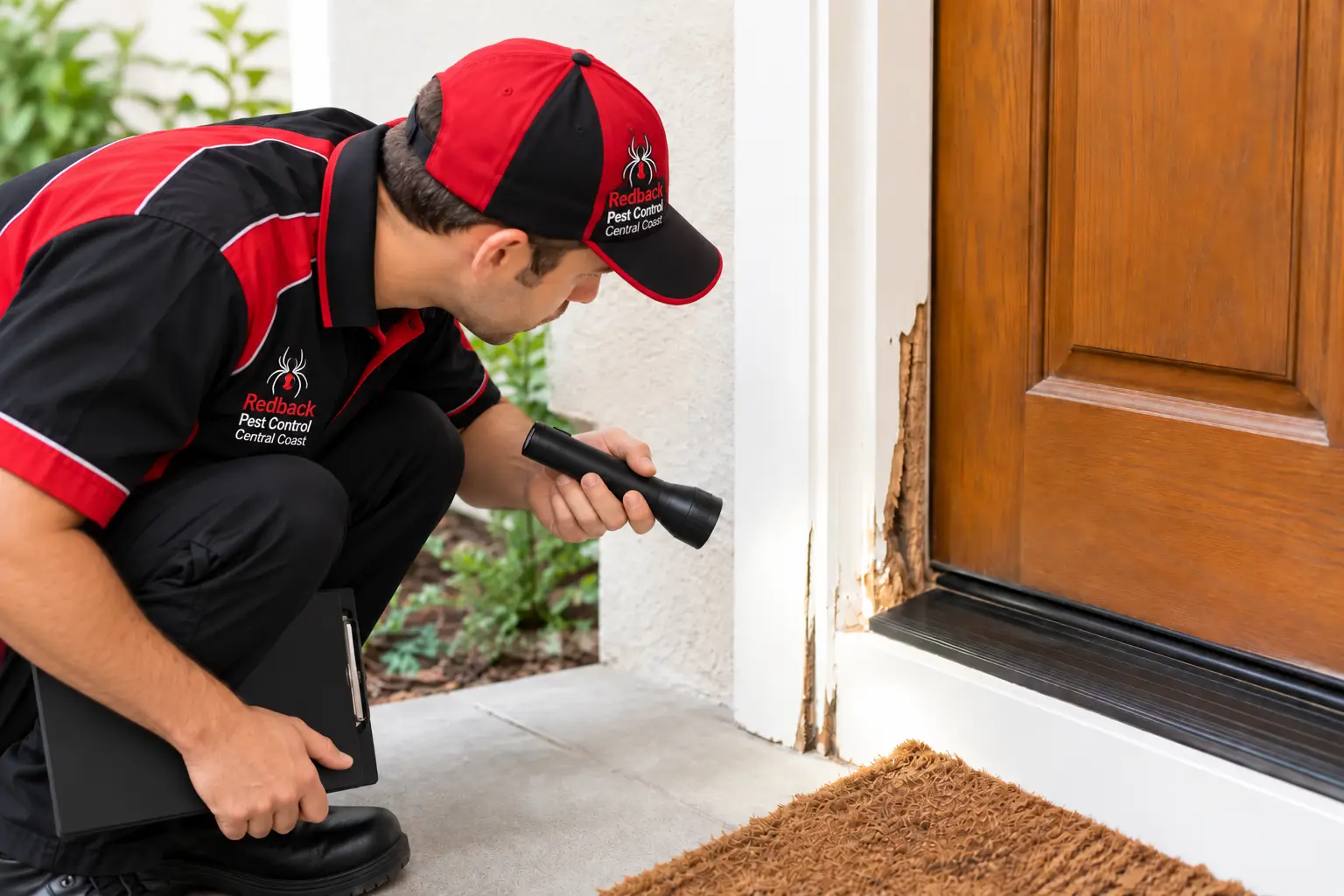
A termite problem rarely starts with obvious damage. In The Entrance, termites can work behind wall linings, under flooring, and inside roof timbers for months before a homeowner sees a single warning sign. A professional termite inspection in The Entrance is designed to find the conditions and entry points that make a property vulnerable, along with evidence of current or previous activity.
For homeowners, investors, landlords, and buyers, the goal is simple: protect your property and protect your budget before a small concealed issue becomes a major repair job. No worries, no stress, no termites starts with knowing what is happening around the building.
Why Termites Are a Risk in The Entrance
The Entrance has many conditions that termites favor: coastal humidity, established gardens, timber fencing, older homes, extensions, and areas where drainage or ventilation may be less than ideal. Proximity to water does not prevent termite activity. In fact, damp soil, leaking plumbing, and shaded subfloor spaces can provide the moisture subterranean termites need.
Termites do not eat only old timber. They may move through framing, skirting boards, built-in cabinetry, door jambs, pergolas, and stored materials. A home with brick veneer or a concrete slab is not automatically protected either. Termites can enter through construction joints, service penetrations, weep holes, cracks, or concealed edges around additions.
Properties around Long Jetty, Blue Bay, Bateau Bay, and Killarney Vale can face similar risks, particularly where landscaping, retained moisture, or timber structures sit close to the home. Each property is different, which is why a proper inspection is more useful than relying on a neighbor’s experience or a quick look around the yard.
What a Termite Inspection Looks For
A thorough inspection is more than searching for live termites. Licensed technicians assess accessible areas of the building, looking for signs of activity, damage, moisture, and pathways termites may use to reach timber. The inspection also identifies construction features that limit access, because those limitations affect how confidently a building can be assessed.
| Inspection area | What the technician checks | Why it matters |
|---|---|---|
| Exterior perimeter | Mud tubes, weep holes, cracks, garden bridges, timber and moisture sources | Most termites begin their concealed journey from the soil outside. |
| Subfloor and slab edges | Ventilation, dampness, stumps, pipes, timbers and concealed entry routes | Poor ventilation and damp conditions can make these areas attractive to termites. |
| Interior rooms | Skirtings, window frames, door frames, walls, flooring and moisture-prone spaces | Damage can be hidden beneath paint, flooring, furniture, or wall finishes. |
| Roof void and accessible timber | Roof framing, leaks, stored items and signs of concealed termite travel | Termites can travel well beyond their original entry point. |
Technicians may use specialist equipment to support the visual inspection, particularly where timber sounds hollow or where moisture readings indicate a potential concern. Equipment helps target areas for closer investigation, but it does not make walls or floors transparent. A good report should clearly explain what was inspected, what was found, and any inaccessible areas that need attention.
Warning Signs That Should Not Wait
Some termite evidence is easy to overlook because it can resemble water damage or general wear. Mud shelter tubes along brickwork, piers, pipes, or concrete edges are a strong warning sign. Timber that sounds hollow when tapped, paint that bubbles without an obvious leak, doors that suddenly stick, or soft flooring may also need investigation.
Flying insects around windows or lights can be another clue during swarming periods. Winged termites and flying ants are often confused, so a photo can help identify what you are seeing. Even if the insects have gone, discarded wings around window sills or inside the home are worth checking.
Not every sign confirms an active infestation. Moisture damage, fungal decay, and old inactive termite damage can look similar. That is exactly why guesswork is risky. The right response depends on whether activity is current, whether termites have access to structural timber, and whether there is a previous protection system on the property.
Inspection Timing Depends on Your Property
Most homes benefit from regular termite inspections, but the interval should reflect the building, its history, surrounding environment, and any existing termite management system. A property with dense gardens, known moisture issues, a subfloor, or nearby termite activity may need more frequent attention than a newer, well-maintained home with a documented protection plan.
Inspection timing also matters when buying or selling. A standard building inspection is not always a substitute for a dedicated timber pest assessment. Before committing to a purchase in The Entrance, buyers should understand whether the accessible structure shows evidence of termite activity, damage, conducive conditions, or areas that could not be inspected.
Landlords and property managers should also treat inspections as part of planned property maintenance. Tenants may notice a sticking door or damaged skirting board, but they should not be expected to diagnose termite activity. Clear reporting gives owners practical information for deciding whether monitoring, treatment, repairs, or moisture correction is appropriate.
If Termites Are Found, What Happens Next?
Finding termites does not automatically mean the same treatment is right for every home. The technician will consider the termite species, where activity is located, construction type, access, soil conditions, and whether a previous barrier or baiting system is in place. The priority is to stop active termites without pushing them into another concealed area.
Depending on the situation, options may include a termite baiting and monitoring system, a chemical soil treatment, treatment to a known entry point, or a combination of approaches. Some homes may also need practical changes such as repairing leaks, improving drainage, removing timber stored against the building, or trimming vegetation away from inspection zones.
A treatment should be paired with a clear plan for follow-up. Termite management is not a one-time decision where ongoing risk factors remain. Regular monitoring and inspections help confirm that protection measures are working and that new pathways have not developed around the home.
Choose Clear Advice, Not Scare Tactics
A professional termite inspection should leave you with useful answers, not pressure. You should understand any evidence found, the parts of the property that could not be accessed, the level of concern, and the practical next step. If treatment is recommended, ask why that option suits your property and what ongoing checks will be needed.
Redback Pest Control Central Coast provides practical termite advice for local properties, from established family homes to investment properties and commercial sites. Whether you have seen mud tubes, noticed suspicious damage, or simply want a scheduled inspection, acting early gives you more options and more control over the cost.
If something around your home does not look right, trust that instinct. A timely inspection can turn an uncertain sign into a clear plan for protecting the property you have worked hard to own.