

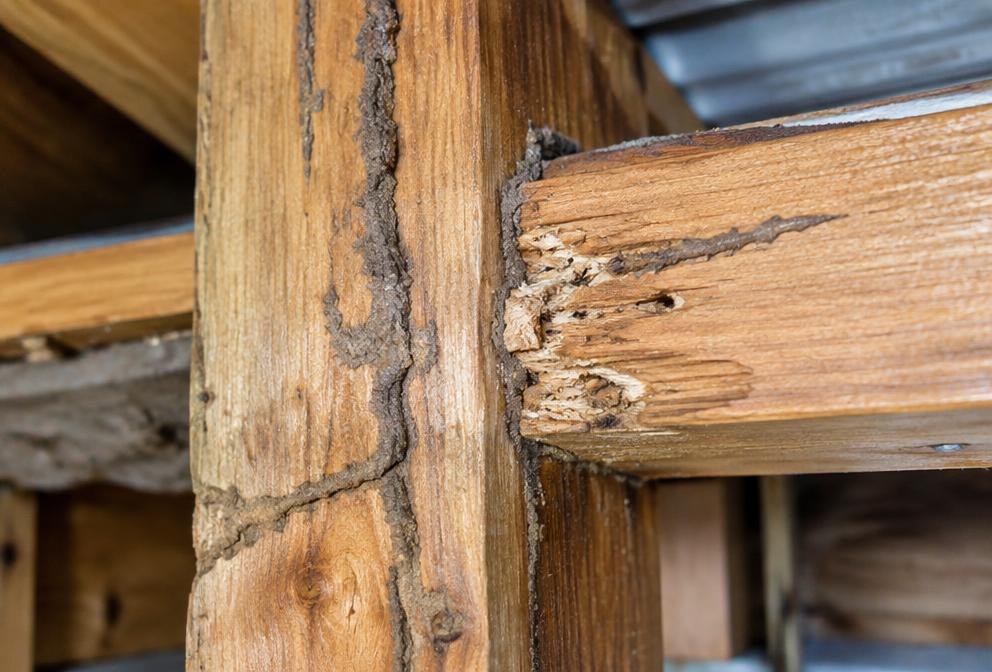
Termite Mud Tubes on Central Coast Homes – What They Mean and What to Do
Termite mud tubes, also known as shelter tubes or mud leads, are one of the most recognisable warning signs of subterranean termite activity around Australian homes.
For homeowners across Gosford, Terrigal, Erina, Wyong, Woy Woy, Bateau Bay and surrounding Central Coast suburbs, discovering a mud tube on brickwork, concrete foundations or timber can be concerning.
These narrow, soil-like passages allow subterranean termites to travel between the ground and potential food sources while remaining protected from sunlight, dry conditions and predators.
Finding a termite mud tube does not automatically confirm an active infestation inside your home, but it should be professionally investigated.
What Do Termite Mud Tubes Look Like?
Termite mud tubes are typically narrow, raised passages made from soil particles, termite secretions and other materials.
They may resemble dried mud, compacted soil or irregular brown lines attached to building surfaces.
Common characteristics include:
Brown or earth-coloured raised passages.
Narrow tubes running vertically along foundations or brickwork.
Mud-like material extending across concrete, timber or masonry.
Covered pathways connecting soil to building components.
Irregular soil deposits around cracks, construction joints or plumbing penetrations.
Some tubes are clearly visible, while others remain concealed behind landscaping, wall linings, stored materials or building structures.
Where Are Termite Mud Tubes Commonly Found?
Subterranean termites may construct shelter tubes wherever they need protected access between the soil and potential timber food sources.
| Location | Why Termites May Use It | Recommended Action |
|---|---|---|
| External brick walls | Provides a route from soil toward concealed building areas | Photograph the tube and arrange an inspection |
| Concrete slab edges | May allow access around vulnerable construction details | Keep the area undisturbed for assessment |
| Subfloor piers | Creates a protected pathway toward flooring timbers | Arrange professional subfloor inspection |
| Retaining walls | May connect soil and nearby timber structures | Inspect surrounding timber and accessible areas |
| Garages and storage areas | Concealed locations may provide protected access | Check nearby joints and stored timber |
| Plumbing penetrations | Gaps around services may provide concealed entry routes | Have vulnerable areas professionally assessed |
Mud tubes may also occur inside wall cavities or behind building finishes, making them difficult to identify without suitable inspection access.
Are Termite Mud Tubes Always Active?
Not necessarily.
A mud tube may be actively used by termites, previously occupied or abandoned.
However, a dry or apparently empty shelter tube does not prove that termite activity has stopped.
Termites may change their foraging routes or remain active in concealed areas elsewhere around the property.
A licensed termite inspector can examine the tube, surrounding building components and other evidence to determine whether further investigation or treatment is required.
Homeowners should avoid breaking open tubes simply to check whether termites are present.
What Should You Do If You Find a Termite Mud Tube?
If you discover suspected termite shelter tubes around your Central Coast home, take the following precautions.
Do not disturb the tube. Avoid scraping, breaking or removing suspected termite workings.
Do not spray insecticide. Household pest sprays may disrupt visible termite activity without addressing the colony.
Take photographs. Capture close-up images and wider photographs showing the tube’s location on the building.
Record the location. Note whether the tube is near foundations, timber, plumbing or moisture-affected areas.
Arrange a professional termite inspection. Have the building and surrounding conditions assessed before deciding on treatment.
Preserving the original evidence can help the technician investigate possible termite entry routes.
Termite Mud Tubes Compared with Other Warning Signs
Mud tubes are an important warning sign, but termites can also leave other evidence around a property.
| Warning Sign | Possible Explanation | Recommended Response |
|---|---|---|
| Mud tubes on foundations | Possible subterranean termite travel route | Professional termite assessment |
| Hollow-sounding timber | Possible internal timber damage or deterioration | Inspect affected and surrounding areas |
| Bubbling paint or damaged skirting | Moisture, timber damage or concealed termite activity | Investigate the cause |
| Discarded wings near windows | Possible recent termite swarm | Collect specimens and arrange identification |
| Soft or damaged flooring | Moisture problems or timber deterioration | Professional inspection |
| Soil deposits around timber | Possible concealed termite workings | Leave undisturbed for assessment |
No single warning sign should be treated as a complete diagnosis. A professional inspection considers multiple pieces of evidence and the property’s construction.
Why Central Coast Homes Can Be Vulnerable
Properties throughout the Central Coast may have environmental and construction conditions that contribute to termite risk.
Common concerns include:
Poor drainage and moisture around foundations.
Timber retaining walls and garden structures.
Garden beds or mulch against external walls.
Concealed slab edges and construction joints.
Timber decks, pergolas and attached structures.
Restricted subfloor access.
Plumbing leaks and damp building materials.
Both established timber-framed homes and newer concrete slab houses can experience termite activity.
Maintaining visible inspection zones and addressing moisture problems can help reduce conditions favourable to termites.
What Happens During a Professional Termite Inspection?
A professional termite inspection involves assessing accessible areas of the property for signs of termite activity, damage and conditions that may encourage concealed entry.
Depending on the property, the inspection may include:
External foundations and accessible slab edges.
Internal walls, skirting boards and flooring.
Accessible roof voids and subfloor areas.
Retaining walls, fences and nearby timber structures.
Moisture-affected areas and plumbing penetrations.
Existing termite barriers and monitoring stations.
The technician may use moisture meters, sounding equipment, thermal imaging or other suitable inspection tools.
Inspection findings should distinguish confirmed activity from suspected evidence and identify areas that could not be accessed.
What Treatment Is Needed If Termites Are Found?
The appropriate termite treatment depends on the species, activity, property construction, available access and existing protection.
Possible management options include:
| Treatment Option | Typical Purpose | Important Consideration |
|---|---|---|
| Termite baiting | Managing termite colonies through bait consumption | Requires ongoing monitoring and servicing |
| Chemical soil treatment | Establishing treated soil zones around vulnerable areas | Correct application and continuity are important |
| Targeted termite treatment | Managing identified activity in accessible locations | Requires suitable registered products |
| Termite reticulation servicing | Maintaining suitable existing treatment networks | System compatibility and condition must be assessed |
| Ongoing termite monitoring | Checking for further termite activity | Does not replace building inspections |
Treatment should be selected following professional assessment rather than relying solely on the appearance of a mud tube.
How to Reduce Termite Risks Around Your Property
While termite prevention cannot eliminate every risk, practical property maintenance can help reduce favourable conditions.
Homeowners should:
Repair plumbing leaks and improve drainage.
Keep accessible inspection zones visible.
Avoid covering slab edges with soil or raised garden beds where inspection access is required.
Manage timber stored against buildings.
Maintain existing termite management systems.
Arrange professional inspections at appropriate intervals.
Obtain advice before renovations or landscaping changes that may affect termite protection.
A termite barrier or treatment system is one part of a broader termite management program and does not guarantee that future termite activity cannot occur.
Professional Termite Inspections on the Central Coast
Discovering a termite mud tube should never be ignored, particularly where the pathway appears to connect the ground with structural timber or concealed building areas.
Redback Pest Control Central Coast provides professional termite inspections, termite identification, treatment recommendations and ongoing termite management services throughout Gosford, Wyong, Terrigal, Erina, Woy Woy and surrounding Central Coast suburbs.
A timely inspection can help establish whether termite activity is present, identify potential entry routes and determine the most appropriate next steps for protecting your property.
Practical next steps
- Photograph suspicious areas without disturbing them.
- Check nearby moisture sources and accessible timber.
- Arrange a licensed termite inspection for reliable identification.
When to call a professional
If you find suspected activity, unexplained timber damage or conditions that concern you, avoid disturbing the area. A licensed termite professional can identify the evidence, explain the accessible findings and recommend options suited to the property.