

Termites rarely announce themselves until damage is already underway. A hollow-sounding wall, a blistered skirting board, or a thin mud tube beside a slab can point to a much bigger problem behind the surface. Choosing the right termite treatment options central coast property owners need starts with finding how termites entered, where they are feeding, and whether the colony is still active.
Central Coast homes face a real mix of termite conditions: damp subfloors near Woy Woy and Umina Beach, bushland edges around Kariong and Lisarow, and established timber homes throughout Gosford, Erina, and Terrigal. No worries, no stress, no termites starts with a professional inspection and a treatment plan built for the property rather than a one-size-fits-all spray.
Why the right treatment matters
Termites do not behave like ants that can be managed by treating a visible trail. Subterranean termites live in the soil and travel through concealed mud leads, wall voids, cracks around plumbing, and expansion joints. Killing a few termites seen inside does not necessarily affect the colony.
A proper termite treatment has two jobs: deal with the active infestation and reduce the chance of concealed re-entry. The best method depends on construction type, access, termite species, moisture conditions, previous treatments, and the extent of damage. A slab-on-ground house in Killarney Vale may need a very different approach from a raised home at Avoca Beach.
Termite treatment options on the Central Coast
Termite baiting systems
Baiting systems use monitored stations installed around the property or directly at known termite activity. When termites feed on the bait, they carry it through the colony. This approach is designed to suppress or eliminate the colony over time rather than create an instant knockdown.
Baiting can suit homes where chemical barrier installation is difficult, where termites are actively feeding in a confined area, or where owners want ongoing monitoring. It does require follow-up visits. Stations need to be checked, replenished, and assessed by a trained technician, so this is not a set-and-forget option.
Chemical soil barriers
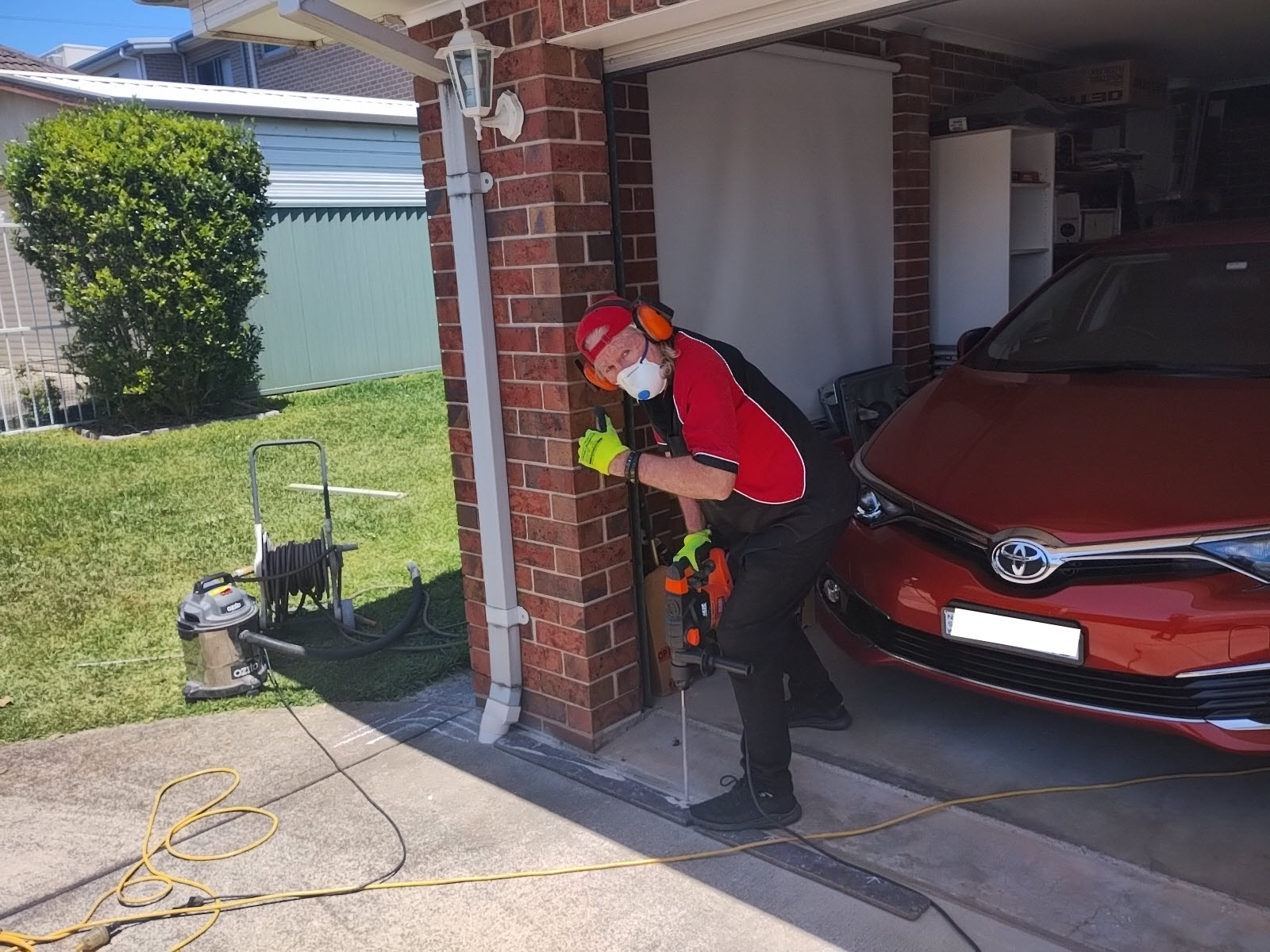
A chemical soil barrier places a termiticide-treated zone around accessible sections of the building. Depending on the home, this may involve treating external soil, drilling through concrete paths or slabs, and treating known entry points. The aim is to protect vulnerable areas by creating a treated zone termites must cross.
This is often a practical choice when the perimeter is accessible and a long-term physical treatment zone is appropriate. However, paths, garden beds, additions, drainage, and concealed construction can affect coverage. A barrier is only as useful as the areas it can properly reach, which is why an inspection comes first.
Direct treatment of active areas
When termites are found in a wall, timber frame, subfloor, or other accessible area, a technician may recommend a targeted direct treatment. This can provide immediate control at the activity point and may be used alongside baiting or a barrier.
Direct treatment alone is not always enough. It may address the termites found that day without protecting untreated entry points elsewhere. For that reason, it is commonly part of a broader termite management plan rather than the only recommendation.
Reticulation system refills
Some properties have an existing chemical reticulation system installed around the building. These systems allow treatment to be distributed through designated pipes, reducing the need for widespread drilling when a refill is due. Before a refill, the system should be checked for its condition, layout, and suitability for the property.
For owners and investors, keeping records of prior termite work can make this assessment easier. If you have treatment paperwork, monitoring records, or a building plan, have it available at the inspection.
| Treatment | Best suited to | Key consideration |
|---|---|---|
| Baiting | Active termites and ongoing colony monitoring | Requires scheduled checks and maintenance |
| Chemical barrier | Accessible perimeters and defined entry-risk areas | Access and construction can limit coverage |
| Direct treatment | Visible or located activity in accessible timber | Usually needs broader protection around it |
| Reticulation refill | Homes with a suitable existing reticulation system | System condition must be verified first |
What happens during a professional assessment?
A licensed technician should inspect accessible internal areas, external walls, subfloors where present, roof voids where safe, gardens close to the building, and likely concealed entry points. Moisture readings and specialist detection equipment can help identify risk areas that are not obvious to the eye.
The result should be clear reporting: where activity or damage was found, what could not be inspected, the likely risk factors, and the recommended next step. If structural damage is suspected, a qualified builder or structural professional may also be needed. Pest technicians manage termites; repair decisions should be made by the appropriate building professional.
Protect your property between inspections
Treatments work best alongside sensible property maintenance. Keep garden mulch and stored timber away from exterior walls, correct leaking taps and drainage issues, and avoid covering weep holes or ventilation openings. In coastal suburbs such as Ettalong Beach and The Entrance, moisture management is especially worthwhile because damp areas can make a property more attractive to termites.
Annual termite inspections are a sensible baseline for many Central Coast homes, though higher-risk properties may need more frequent checks. Homes near bushland, properties with a history of termites, older timber construction, and houses with restricted subfloor access all deserve closer attention.
Choose treatment based on evidence, not guesswork
The cheapest-looking option is not always the most affordable if it leaves a colony active or overlooks another entry point. Ask what the treatment is designed to achieve, what areas can and cannot be protected, what follow-up is required, and how ongoing monitoring will be handled. Clear answers protect your budget as well as your home.
If you have seen mud tubes, wings, damaged timber, or unexplained paint bubbling, keep the area undisturbed and arrange an inspection. Fast action gives a technician the best chance to identify the termites, recommend the right treatment, and help protect the property before the damage grows.