
A single torn food carton, rodent droppings behind a pallet rack, or moth activity in stored goods can quickly become a costly warehouse problem. Effective warehouse pest management protects stock, staff, equipment, and your business reputation before a small issue turns into rejected deliveries, customer complaints, or failed audits.
Warehouses across the Central Coast face different pressures than homes. Large roller doors are opened throughout the day, deliveries introduce new materials, pallets create sheltered harborages, and stock can sit undisturbed for weeks. Whether your facility is in Tuggerah, Somersby, Wyong, or Berkeley Vale, pest control needs to suit how the site operates – not rely on a one-off spray.
Why warehouse pests are a serious business risk
In a warehouse, pests rarely stay in one corner. Rodents can contaminate stock, chew electrical cables, damage insulation, and travel along wall voids and racking. Cockroaches spread through staff areas, cardboard, drains, and warm equipment spaces. Stored-product insects can infest dry foods, animal feed, grains, packaging, and ingredients without being noticed until goods are opened or dispatched.
The financial impact is not limited to replacing damaged inventory. Businesses may also face clean-up costs, delayed orders, supplier disputes, audit non-conformances, and lost confidence from customers. Food, pharmaceutical, packaging, logistics, and retail distribution facilities need particularly careful pest documentation because a visible pest issue can affect the entire supply chain.
| Pest | Common warehouse warning signs | Likely business risk |
|---|---|---|
| Rats and mice | Droppings, gnaw marks, rub marks, damaged cartons, noises after hours | Contaminated stock, cable damage, product loss |
| Cockroaches | Live insects near kitchens, dock areas, drains, or machinery | Hygiene failures and rapid population growth |
| Stored-product insects | Webbing, beetles, larvae, small moths, damaged dry goods | Infested inventory and rejected shipments |
| Birds | Droppings on loading bays, beams, and stored materials | Contamination, slip hazards, and building damage |
What effective warehouse pest management looks like
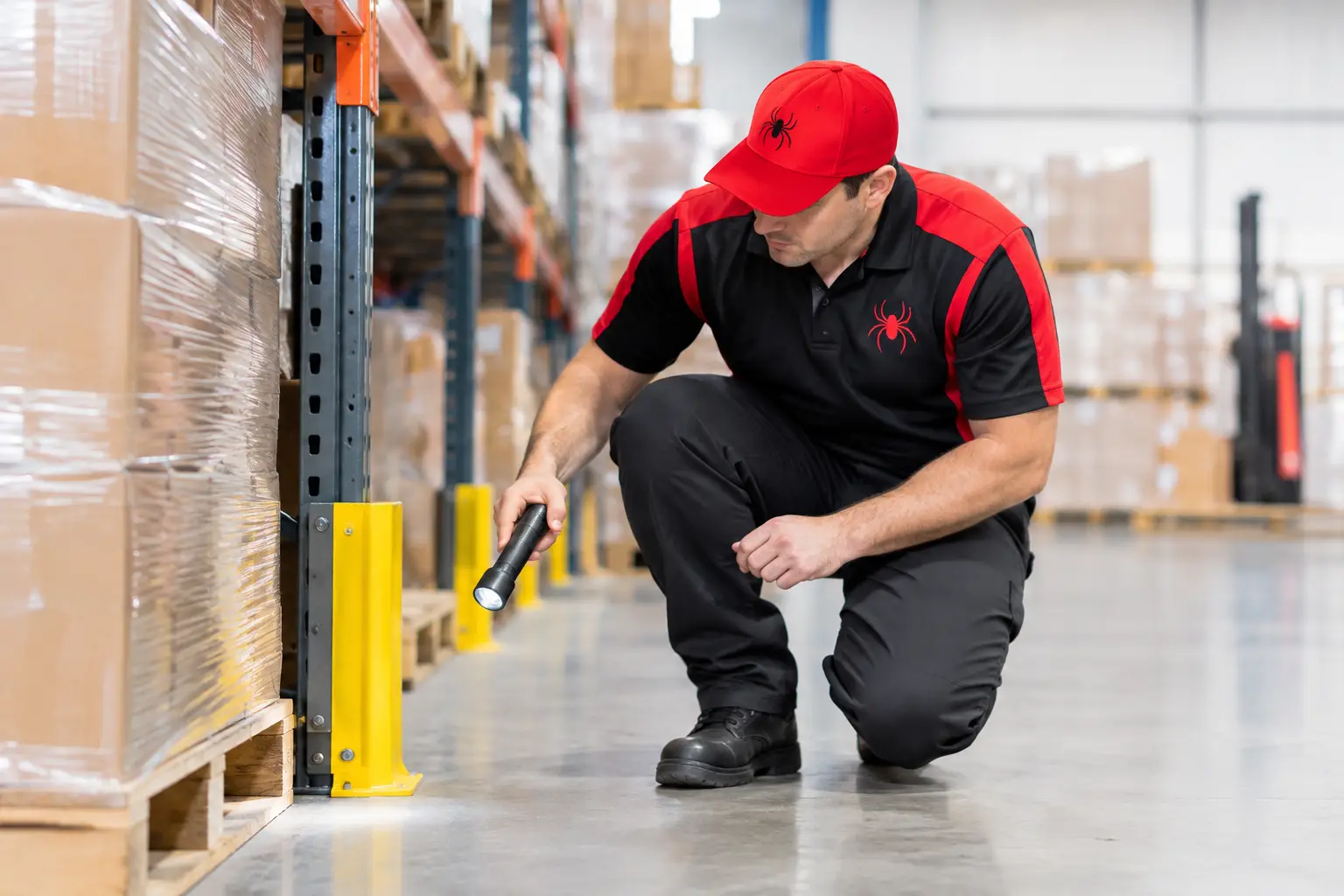
A professional program starts with inspection, not assumptions. A licensed technician should assess external boundaries, loading docks, roller doors, roof voids, staff rooms, waste areas, drains, storage zones, and the gaps around services entering the building. The aim is to identify the pest, locate activity, and understand why the pest is able to access food, water, shelter, or nesting space.
From there, an integrated pest management plan combines monitoring, exclusion, sanitation recommendations, targeted treatments, and regular reporting. This approach is more practical than repeatedly treating visible activity while leaving open access points and food sources untouched.
Monitoring gives you an early warning
Rodent stations, insect monitors, and carefully placed traps help reveal activity before pests spread into stock areas. Their placement matters. Devices should be mapped, numbered, checked routinely, and positioned where they can be serviced safely without creating a risk around forklifts, dispatch lanes, or stored goods.
The right servicing frequency depends on the warehouse. A food distribution facility or business with frequent dock traffic may need closer monitoring than a low-traffic warehouse storing sealed non-food products. Pest pressure can also rise after heavy rain, nearby construction, changes in waste collection, or a new supplier bringing in heavily packaged materials.
Exclusion is often the best long-term investment
Rats and mice can enter through surprisingly small gaps. Damaged door seals, gaps beneath roller doors, broken vents, unsealed pipe penetrations, and poorly maintained dock doors all deserve attention. Bird proofing may also be needed where loading areas remain open for long periods.
Exclusion work can involve a cost upfront, but it reduces the dependence on ongoing treatments. It is especially valuable for warehouses near bushland, waterways, or industrial areas with high rodent activity. A treatment program is still useful, but a building that is easy for pests to enter will always need more intervention.
Protecting stock without disrupting operations
Warehouse managers often worry that pest treatment will interrupt dispatch or place stock at risk. That is why treatment selection and scheduling should match the site. Targeted gel treatments, crack-and-crevice applications, trapping, exterior baiting, and monitoring devices can often be used with minimal disruption when applied by a trained technician following the product label and site safety requirements.
For sensitive facilities, treatments should be planned around production schedules, stock movement, cleaning procedures, and restricted areas. Staff need clear instructions about any access limitations, while managers need service records that explain what was found, what action was taken, and what building or housekeeping issues need follow-up.
Documentation is more than paperwork. Trend reports can show whether activity is seasonal, isolated to a particular dock, or linked to a recurring maintenance issue. For strata managers, government facilities, and multi-tenant industrial sites, clear reporting also helps establish responsibility for repairs and sanitation tasks.
When to call for commercial pest control
Do not wait for a major infestation. Arrange an inspection if you find droppings, gnawed cartons, insect activity in stock, bird droppings around loading areas, unexplained odors, or repeated pest sightings by staff. A sudden increase in activity can point to an access issue that needs fast attention.
Redback Pest Control Central Coast can help businesses build a practical commercial pest program around their warehouse layout, stock type, and compliance needs. The goal is straightforward: protect your property, protect your budget, and keep pests from becoming a disruption to your operation.
A clean warehouse is not automatically a pest-free warehouse, but early reporting, regular monitoring, and prompt maintenance give you the best chance of stopping activity before stock and service are affected.