
A termite treatment is not a one-size-fits-all decision. When comparing termite baiting versus chemical barriers, the right choice depends on how termites are entering, the construction of your home, existing activity, access around the building, and the level of ongoing protection you need. For Central Coast homeowners, getting this decision right can protect the property and the budget from hidden timber damage.
Why termite protection matters on the Central Coast
Termites do not need a dramatic crack in a wall to enter a building. They can work through tiny gaps around service penetrations, construction joints, plumbing, weep holes, and concealed slab edges. Once inside, they stay out of sight, often feeding within wall frames, flooring, skirting boards, door jambs, and roof timbers.
Homes in areas such as Gosford, Erina, Terrigal, Woy Woy, and Wyong can face elevated termite pressure because the Central Coast combines warm conditions, rainfall, established gardens, bushland pockets, and plenty of timber-framed homes. Coastal moisture, poor drainage, leaking plumbing, stored timber, and gardens built against exterior walls can all make a property more attractive to termites.
The key point is simple: termite baiting and chemical barriers work in different ways. A licensed termite technician should assess the building and explain which option suits the risk, rather than recommending a treatment based on price alone.
Termite baiting: targeting the colony
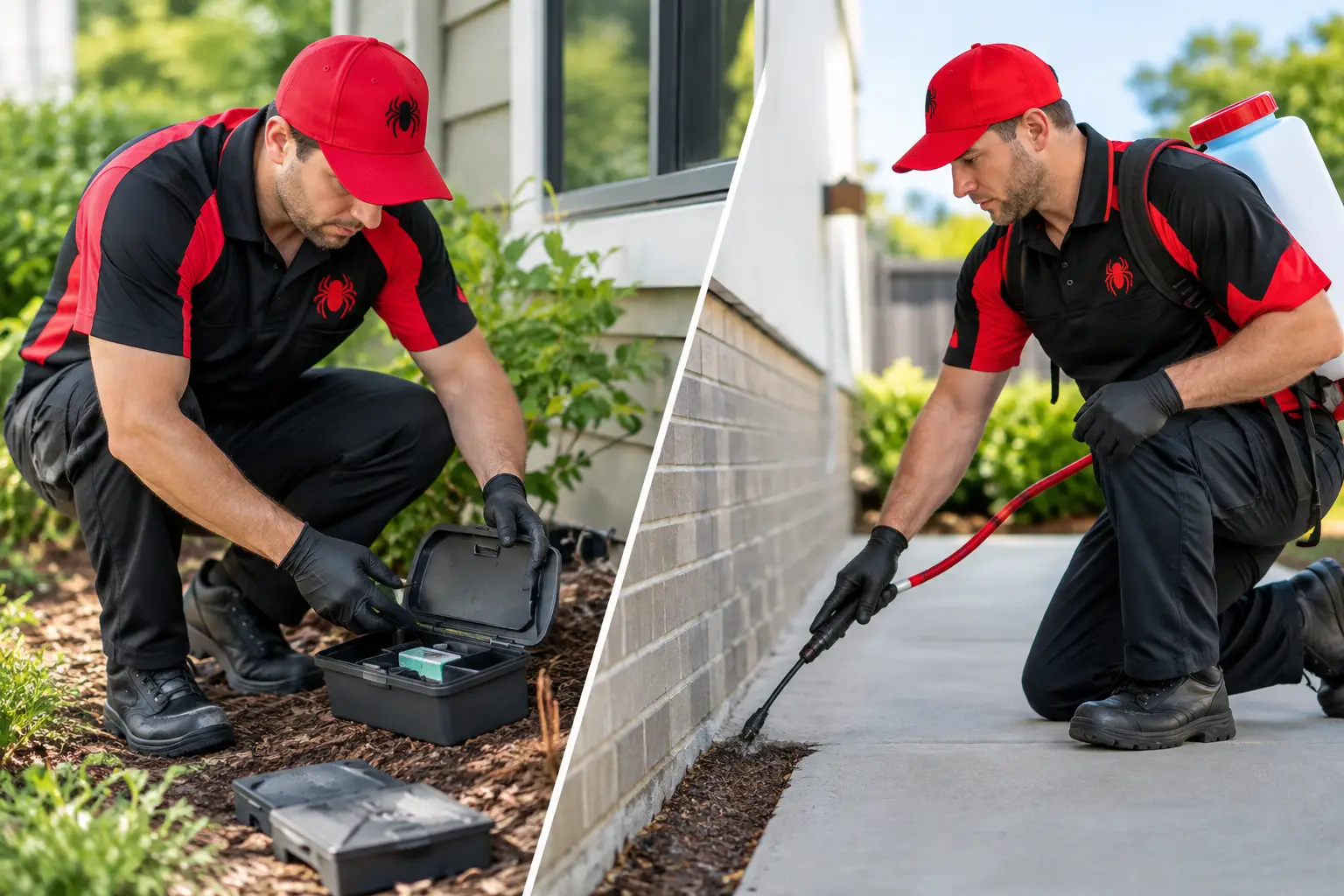
A termite baiting system uses monitoring stations installed around the property, typically in soil where termites are likely to forage. These stations are checked at scheduled intervals. If termites are found feeding in a station, a bait containing a slow-acting growth regulator may be introduced.
The bait is designed to be shared through the termite population. Because it acts slowly, termites can continue feeding and transfer it to other colony members before the effect takes hold. The goal is to suppress or eliminate the colony that is attacking or foraging near the building.
Baiting is often useful where soil treatment access is limited. That may include homes with extensive paving, decks, garden beds, retaining walls, complex landscaping, or building features that make a continuous chemical treatment difficult. It can also suit properties where active termites have been located and colony-focused control is appropriate.
However, baiting requires commitment. Stations must be inspected and maintained by a trained technician, and activity cannot be predicted to a fixed schedule. Termites need to find and feed at the stations. A baiting program is not a set-and-forget product, and it does not remove the need for regular termite inspections.
When baiting may be the better fit
Baiting can be a practical option for a home in Kincumber, Kariong, or Long Jetty where access around the slab is restricted, a chemical barrier would be heavily interrupted, or live termite activity needs a carefully managed response. It can also be part of a broader protection plan for buildings with complicated construction.
The trade-off is ongoing monitoring cost and the need for reliable service visits. Property owners should understand the inspection schedule, what happens when activity is found, and whether the program includes reporting on station condition and termite findings.
Chemical barriers: creating a treated zone
A chemical barrier is a professionally applied termiticide treatment in the soil around, beneath, or at key entry points of a building. Its purpose is to create a treated zone that termites encounter as they move between the soil and structural timber.
Depending on construction and access, treatment may be applied externally around the perimeter and, where needed, through carefully placed treatment points in concrete, paths, garages, or internal slab areas. The method should be tailored to the property. A house on a slab, a home with a subfloor, and a split-level property each present different termite entry risks.
Chemical barriers are often selected when a continuous or largely continuous treatment zone can be achieved. They can provide a direct protective measure around the structure, particularly when installed correctly and supported by regular inspections. They are also commonly considered during construction or major renovation work, when access to critical areas is easier.
No chemical barrier should be described as permanent. Landscaping changes, excavation, plumbing work, extensions, drainage problems, and soil disturbance can affect its integrity. Termites can also find untreated gaps if treatment continuity is compromised.
When a chemical barrier may be the better fit
A chemical barrier may suit a property in Umina Beach, Berkeley Vale, or Bateau Bay where technicians can access the perimeter and target likely entry points effectively. It can be especially practical for homeowners seeking a defined treatment around the building, rather than a monitoring-based program.
Before proceeding, ask how much of the perimeter can be treated, where gaps may remain, how long the recommended treatment is expected to perform under local conditions, and what inspection schedule is still required. Clear reporting matters because future owners, property managers, and trades may need to know where treatment has been carried out.
Termite baiting versus chemical barriers: key differences
| Treatment factor | Termite baiting | Chemical barriers |
|---|---|---|
| Primary approach | Targets foraging termites and colony activity | Creates a treated zone at termite entry points |
| Access requirements | Useful where soil treatment access is difficult | Works best where important areas can be reached and treated |
| Ongoing service | Regular station inspections are essential | Regular termite inspections remain essential |
| Best considered for | Complex sites or colony-focused management | Accessible buildings needing a protective treatment zone |
Can you use both treatments?
Yes. Some properties benefit from a combined strategy. For example, a chemical treatment may protect accessible sections of a home while a baiting system monitors areas where access is restricted or termite pressure is high. This is not automatically necessary, but it can be a sensible recommendation after a detailed inspection.
The most effective program also addresses conditions that help termites. Repair leaking taps and pipes, direct water away from foundations, keep subfloor ventilation clear, avoid storing timber against the house, and maintain a visible inspection zone where practical. These steps do not replace treatment, but they reduce concealed entry opportunities.
Choose treatment after a professional inspection
Do not choose between baiting and barriers based only on a neighbor’s experience or an online price. A proper termite inspection should consider the building design, soil access, landscaping, moisture issues, previous treatment records, visible damage, and any signs of active termites.
For landlords, strata managers, and investors, documented findings are particularly valuable. They help prioritize repairs, communicate risks to occupants, and plan ongoing protection across the property. If you are buying a home in The Entrance, Toukley, or another Central Coast suburb, a timber pest inspection before settlement can identify risks that are easy to miss during a standard walkthrough.
Protect your property before termites turn a small hidden problem into major repair work. A clear inspection and a treatment plan built around your actual home will give you practical next steps, no worries, no stress, no termites.