

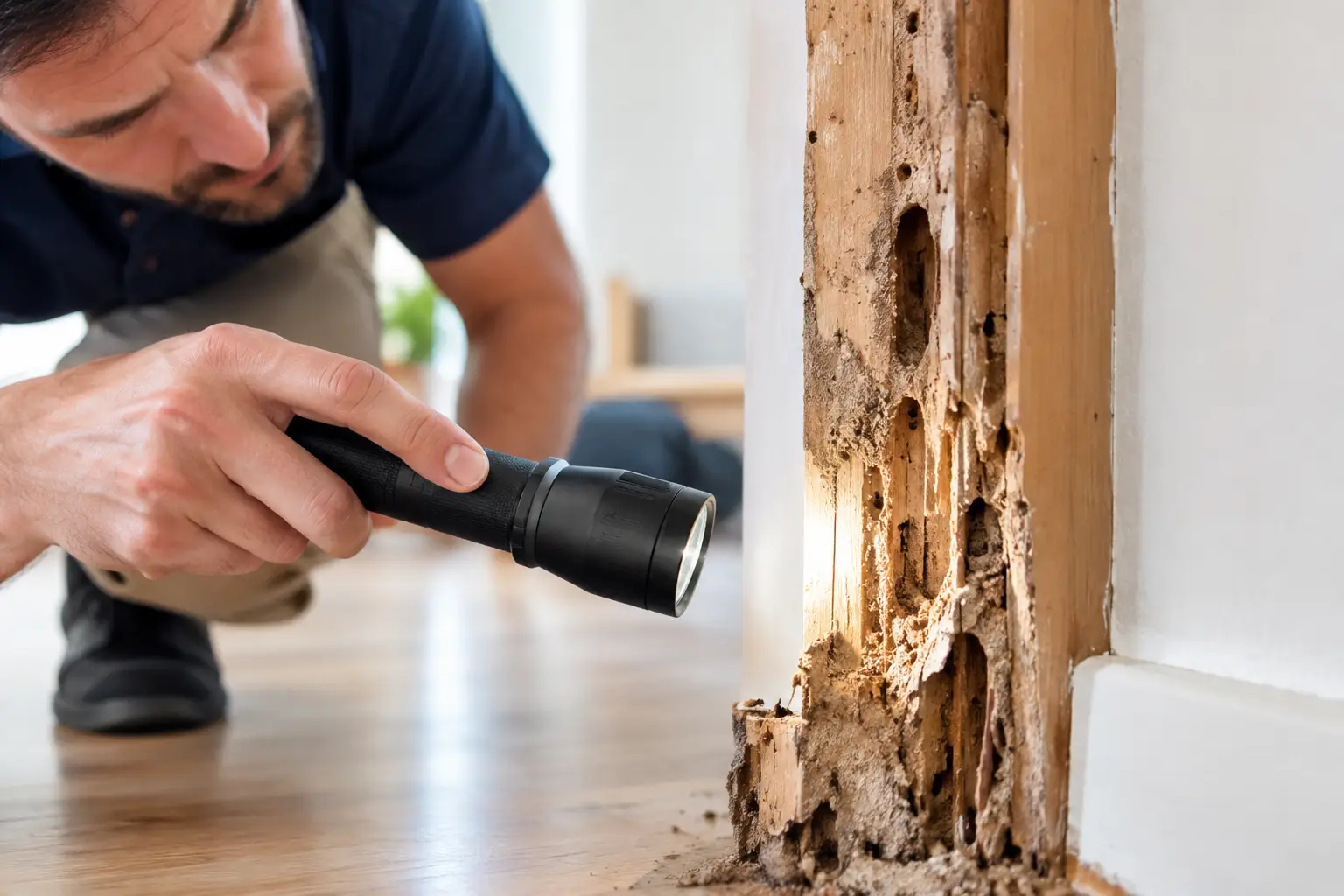
A door that suddenly sticks, a faint papery sound inside a wall, or paint that looks strangely bubbled can be more than a maintenance issue. When people search for signs of termites in house Australia, they are usually trying to work out whether a small concern could become an expensive structural problem. On the Central Coast, warm conditions, moisture, garden timber, and concealed entry points can all give termites an opportunity to reach a home.
Termites do not usually make themselves obvious. They work inside timber, behind plasterboard, beneath flooring, and around slab edges, often causing damage before a homeowner sees a single insect. The good news is that early warning signs can lead to a practical response. Protect your property, protect your budget, and arrange a professional inspection before guessing or disturbing suspected activity.
The most common signs of termites in a house in Australia
The most reliable clues are often found in quiet, hidden parts of the property: the subfloor, garage, roof void, laundry, meter box area, garden-facing walls, and around plumbing penetrations. A visual check can be useful, but it cannot rule termites out. These pests may travel through concealed soil tunnels and feed inside timber that still looks sound on the outside.
Mud tubes on walls, piers, or slab edges
Termites need humidity while traveling between the soil and a food source. They create narrow shelter tubes from soil, saliva, and wood particles to stay protected from dry air and light. You may find these tubes on brickwork, concrete piers, retaining walls, around service pipes, or along the edge of a slab.
Do not break a tube open simply to see if termites are active. Disturbing it can cause the colony to retreat and make professional assessment more difficult. Take a clear photo from a short distance, avoid spraying it, and book a termite inspection.
Timber that sounds hollow or feels weak
Termites commonly eat the softer material within timber, leaving a thin outer surface that can look normal. Tapping a skirting board, architrave, door frame, or exposed floor joist may produce a hollow sound. In more advanced cases, timber can feel soft, buckle under pressure, or break away with little force.
A hollow sound alone is not a diagnosis. Water damage, wood rot, and construction gaps can produce similar symptoms. However, hollow timber combined with mud tubes, blistered paint, or small holes should be treated as urgent.
Bubbled paint, rippled walls, or damaged trim
Termite feeding can create a moisture-like appearance as they damage timber behind painted surfaces. Paint may bubble, peel, or look raised. Door jambs and window frames may appear warped, while skirting boards can show small dents or channels beneath the paint.
On homes around Terrigal, Avoca Beach, and Wamberal, coastal moisture can also affect building materials, so this sign needs careful interpretation. A licensed technician can distinguish likely termite activity from moisture damage and identify the source of the issue.
Tight-fitting doors and windows
Doors and windows that once moved freely can become hard to open when termites damage frames or when moisture affects timber. This is not proof of termites, particularly after wet weather, but it warrants a closer look if it occurs alongside other warning signs.
Check the surrounding frame for bubbling paint, fine cracks, soft timber, or dark mud-like material in corners. Avoid forcing the door or window if the frame appears weak.
Flying termites or discarded wings
Swarming termites are reproductive termites leaving an established colony to start new ones. They are often attracted to lights and may appear near windows, doors, or outdoor lighting. After a swarm, you may see piles of similarly sized translucent wings on sills, floors, or patios.
Winged ants can be mistaken for termites. Termites have a broad waist, straight antennae, and four wings of similar length. Flying termites do not automatically mean the colony is inside your home, but they do mean termites are active nearby and an inspection is sensible.
Act quickly, but do not panic. Do not spray suspected termites with household insecticide, pull apart damaged wood, or remove mud tubes. These actions can disrupt visible activity without addressing the colony. Keep the area undisturbed and arrange professional advice.
Where termites commonly enter Central Coast homes
Termites can enter through gaps as small as a few millimeters. A concrete slab is not a guaranteed barrier because termites can travel around the slab edge, through construction joints, and alongside plumbing or electrical services. Homes with suspended timber floors have different risk points, including accessible subfloors, piers, damp soil, and exposed timber.
| Risk area | What to look for | Practical action |
|---|---|---|
| Slab perimeter | Mud tubes, concealed weep holes, garden soil built up against walls | Keep slab edges and weep holes visible where possible |
| Subfloor | Damp soil, poor ventilation, timber debris, damaged piers | Address drainage and maintain safe access for inspections |
| Garden and exterior | Timber sleepers, stumps, mulch against walls, leaking taps | Store timber away from the house and reduce excess moisture |
Properties in Gosford, Erina, Kariong, Wyong, and bush-adjacent suburbs may have mature gardens, retaining walls, or timber landscaping that create hidden inspection challenges. That does not mean every property has termites. It does mean regular inspections are a sensible part of property care, especially for homes with previous activity or known moisture issues.
What a professional termite inspection can reveal
A professional inspection is more than a quick walk around the home. A technician assesses accessible internal areas, roof voids, subfloors, exterior walls, fence lines, garden structures, and potential entry points. Moisture meters and specialist detection equipment may help identify conditions or areas that need closer investigation.
The outcome should be clear: evidence of active termites, previous damage, conditions that increase risk, inaccessible areas, and practical recommendations. If activity is confirmed, the right treatment depends on the construction of the property, the termite species, the extent of activity, and access around the home. Options may include baiting systems, localized treatments, chemical soil barriers, or a combination approach.
There is no one-size-fits-all termite treatment. Baiting can be valuable where colony elimination is the goal and ongoing monitoring is practical. A chemical barrier may suit certain building layouts and risk areas. The best choice comes after a proper inspection, not from a spray can or an online guess.
Reduce conditions that attract termites
Prevention cannot make a property termite-proof, but it can reduce favorable conditions and make inspections easier. Repair leaking taps, overflowing gutters, and drainage issues that keep soil damp near the building. Keep stored timber, cardboard, old stumps, and untreated sleepers away from the home. Avoid piling mulch or soil high against exterior walls, particularly where it covers weep holes or slab edges.
For landlords, investors, and strata managers, documented termite inspections are particularly useful. They provide a record of the property condition, identify maintenance items before they become larger problems, and support timely decisions when signs of termite activity appear.
If you have noticed mud tubes, hollow timber, flying termites, or unexplained paint damage, Redback Pest Control Central Coast can provide practical inspection and treatment guidance for homes across the region. No worries, no stress, no termites starts with acting on the first suspicious sign rather than waiting for visible damage to spread.