

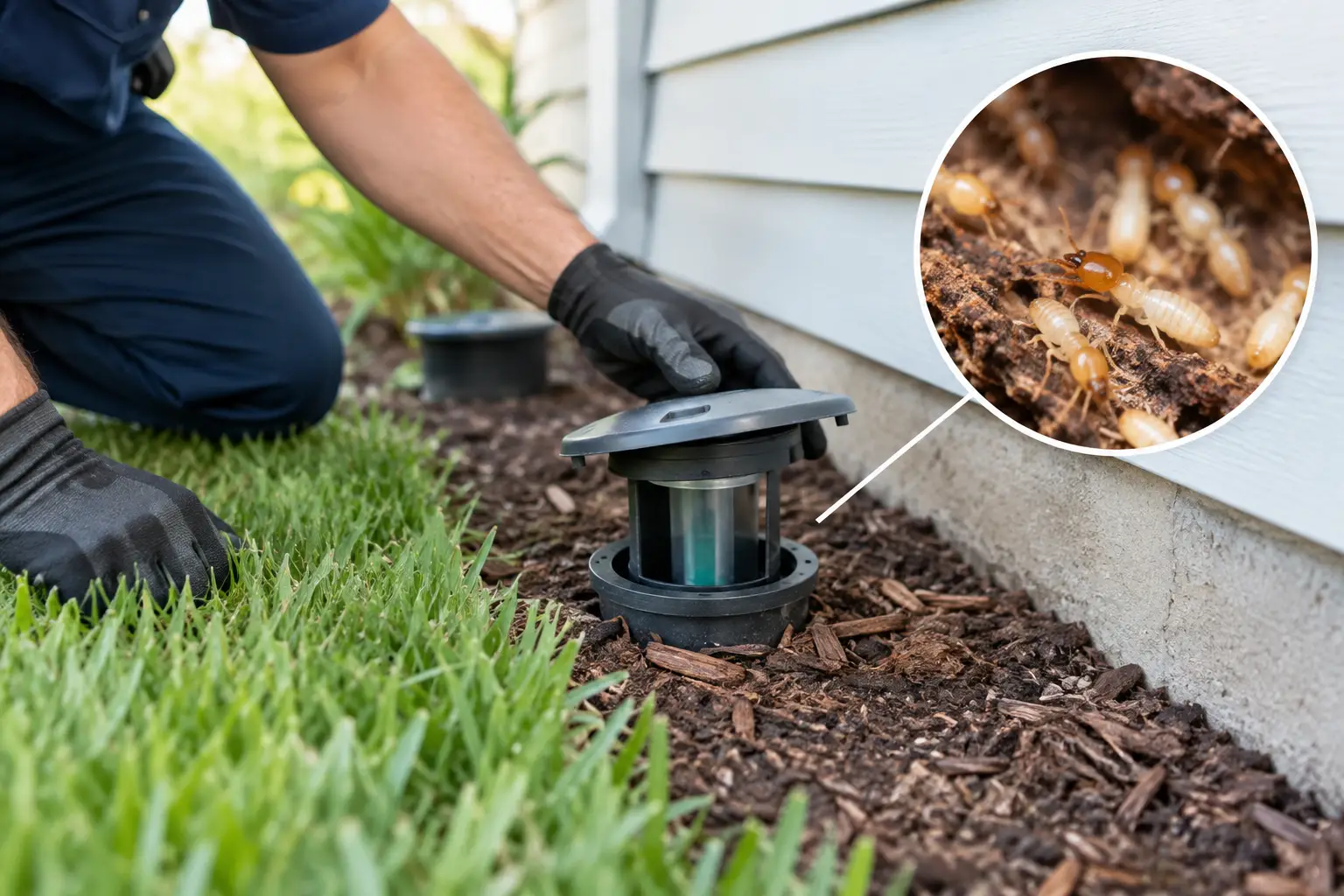
A termite colony can work quietly behind a wall, beneath a deck, or under a slab long before a homeowner sees obvious damage. That is why termite baiting systems for homes are often recommended for Central Coast properties where termites are active nearby, access is limited, or ongoing monitoring is the safest practical option. A baiting system is not a one-visit fix. It is a managed protection program designed to find foraging termites, feed bait back through the colony, and keep checking the property over time.
How Termite Baiting Systems for Homes Work
A professional baiting system uses discreet monitoring stations installed in the soil around the building perimeter. These stations contain timber or other termite-friendly material that is checked by a licensed technician at scheduled intervals. The goal at first is detection: termites may find a station before they find the home, or the station may confirm activity already present around the property.
When live termites are feeding in a station, the monitoring material can be replaced with a termite bait. The bait is designed to be slow acting. Foraging workers feed on it and share it within the colony, including with other workers and developing termites. Because termites do not groom away or avoid the bait immediately, this can gradually disrupt the colony.
That slow action is deliberate. A bait that acted too quickly could kill only the termites present in the station and alert the rest of the colony to avoid the area. Successful termite baiting depends on regular inspection, correct bait placement, enough feeding activity, and professional follow-up. It is a process, not a product dropped into the ground and forgotten.
Protect your property: A bait station without scheduled monitoring is not a reliable termite protection plan. Stations must be inspected, recorded, and serviced when termite activity is found.
Why Baiting Can Suit Central Coast Properties
Central Coast homes face different termite pressures depending on their construction, surrounding vegetation, moisture conditions, and maintenance history. Properties in leafy areas such as Kariong, Lisarow, Kincumber, and Wamberal may have timber landscaping, mature trees, garden beds, and retained moisture close to the building. Coastal homes in Terrigal, Avoca Beach, Umina Beach, and Ettalong Beach can also have concealed entry points around additions, decks, service penetrations, and subfloor areas.
Baiting can be particularly useful where a traditional soil treatment is difficult to install continuously around the structure. Concrete paths, driveways, patios, garden structures, and neighboring buildings can interrupt access to the soil. A technician may recommend stations as part of a broader termite management plan when those physical limitations matter.
It may also suit homeowners who want ongoing monitoring after a termite issue has been addressed. The system creates regular opportunities to inspect the perimeter and respond early to fresh activity. That ongoing oversight can be valuable, but it does not make the home termite-proof. No treatment can remove every termite risk forever.
Baiting Versus Chemical Barriers
Termite baiting and chemical barriers solve related problems in different ways. A chemical barrier is applied to soil in strategic areas to create a treated zone that termites must cross or avoid. It can be highly effective where the site allows complete, well-designed coverage. Baiting is aimed at attracting and affecting foraging termites through monitored stations.
| Treatment option | Best suited to | Key consideration |
|---|---|---|
| Baiting system | Properties needing ongoing monitoring or with difficult perimeter access | Requires regular technician inspections and active feeding for baiting |
| Chemical barrier | Homes where accessible soil areas allow suitable treatment coverage | Concrete, landscaping, and construction details can affect continuity |
| Combined plan | Higher-risk homes or properties with known termite history | Recommendations should follow a detailed inspection |
Neither option should be chosen solely because it sounds simpler or cheaper at the start. The right approach depends on termite evidence, construction type, access, drainage, garden layout, previous treatment records, and the homeowner’s ability to maintain inspections. For some homes, a combination of localized treatment, baiting, moisture correction, and monitoring is the most sensible way to protect the budget.
What a Professional Baiting Program Includes
A proper program starts with a thorough termite inspection. The technician checks accessible subfloors, roof voids, internal areas, external walls, fences, retaining timbers, garden edges, and likely termite entry points. They are looking for mud tubes, damaged or hollow-sounding timber, moisture problems, termite workings, and conditions that make the building more attractive to termites.
Stations are then positioned in suitable locations around the property. Placement is not random. Technicians consider landscaping, soil access, downpipes, older tree stumps, timber features, and areas where termites are most likely to forage. The number of stations and the visit schedule should match the property, rather than follow a one-size-fits-all layout.
At each service, the stations are checked for termite activity and their condition is recorded. If termites are found, baiting can begin and the inspection schedule may be adjusted. Clear reporting matters for homeowners, landlords, strata managers, and investors because it shows where activity occurred, what action was taken, and what needs attention next.
Warning signs that should not wait
Do not wait for a baiting appointment if you see mud shelter tubes on brickwork, piers, plumbing lines, or foundations. Other warning signs include blistered paint, tight-fitting doors, sagging floors, unexplained cracks in trim, soft timber, or small piles of winged insects near windows. Swarmers can be a sign that termites are nearby, while discarded wings may indicate they have already entered the property.
If live termites are exposed, avoid spraying them with household insecticide or pulling apart their workings. That can cause the colony to retreat and make professional treatment more difficult. Keep the area undisturbed where possible and arrange an inspection promptly.
Make Your Home Less Attractive to Termites
Baiting works best alongside practical property maintenance. Keep timber, cardboard, and stored building materials off the ground and away from exterior walls. Repair leaking taps, overflowing gutters, and drainage issues that keep soil damp near the building. Trim vegetation away from the structure and make sure subfloor vents are not blocked by soil, mulch, or stored items.
These steps do not replace professional termite protection, especially for homes with a prior history of activity. They do reduce favorable conditions and make inspections more effective. For a property in Gosford, Wyong, The Entrance, or another Central Coast suburb, the small details around gardens, decks, and drainage can make a meaningful difference.
When to Choose a Baiting System
Consider a professional assessment if you have live termite activity, a history of termites on the property, difficult access around a slab home, or concern about nearby timber and moisture conditions. Baiting may also be a good fit for landlords and property managers who need documented, repeatable monitoring across a tenancy or strata site.
The most useful next step is not guessing which treatment is best. It is getting a trained technician to inspect the property and explain the practical options in plain language. Early action can limit damage, protect resale value, and prevent a small concern from becoming a major repair bill. No worries, no stress, no termites starts with giving suspicious signs the attention they deserve.