

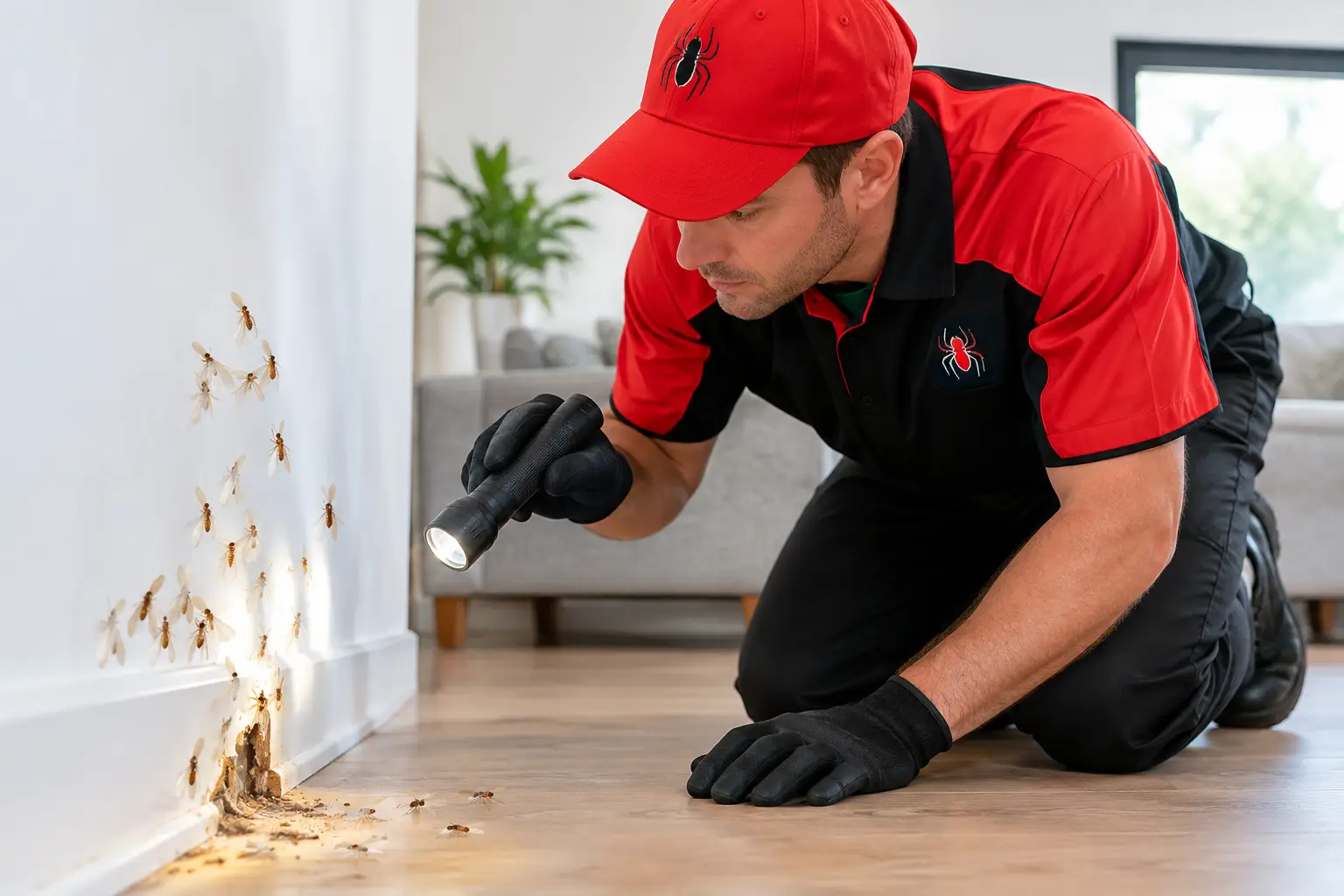
A cluster of winged insects around an interior light, window, or sliding door can make any property owner stop in their tracks. If you are asking, why do termites swarm indoors, the short answer is that mature termite colonies release winged reproductive termites to establish new colonies. The more urgent answer is that an indoor swarm may indicate termites are active in or very close to the building.
Do not assume every flying insect is a termite, and do not assume an indoor swarm proves the colony is inside a wall. Flying ants can look similar, and termites from an outside colony can be drawn indoors by lights. Still, this is not a warning sign to ignore. A professional inspection is the practical next step to protect your property and your budget.
Why Do Termites Swarm Indoors?
Termites swarm when a colony has reached a mature stage and conditions are suitable for reproduction. The winged termites, often called alates, leave their original colony to pair up and start new ones. Warm, humid conditions after rain can trigger this activity, which is why swarms can seem sudden and dramatic.
When the insects appear indoors, there are two main possibilities. A colony may be concealed within the structure, perhaps in a wall cavity, subfloor, roof void, or timber feature. Alternatively, a swarm may have emerged outside and found its way through open doors, vents, gaps around windows, or light fittings. The difference matters, but neither scenario can be confirmed by sight alone.
On the Central Coast, homes around Gosford, Terrigal, Erina, Woy Woy, and the lakeside and beachside suburbs often face conditions termites favor: moisture, leafy vegetation, timber landscaping, and warm weather. A well-maintained home can still be vulnerable. Termites do not need a neglected property to find a concealed entry point.
Act promptly: An indoor termite swarm is a reason to arrange a termite inspection, not a reason to panic. Keep a small sample if possible, take clear photos, and avoid disturbing any mud tubes or damaged timber you find.
What an Indoor Swarm Can Tell You
Swarming termites are not the termites that cause most of the damage. Worker termites are the pale, soft-bodied insects that remain hidden while feeding on timber. The winged termites are a visible clue that a colony has been established long enough to reproduce.
If the swarm begins from a crack in a wall, under flooring, behind skirting boards, or from a ceiling opening, the chance of nearby termite activity is higher. Piles of discarded wings on window ledges, floors, or near light fixtures are another reason to investigate. Alates shed their wings after landing, so the swarm itself may be gone quickly while the evidence remains.
It depends on where and how the insects appeared. A few winged termites near an open window on one humid evening may have come from outdoors. Hundreds emerging repeatedly in a closed room, or wings appearing from a specific internal location, deserve urgent professional attention.
Termites or flying ants?
Flying ants are commonly mistaken for termites. Termites have a broad, straight-looking body, straight antennae, and four wings of similar length. Flying ants have a narrow, pinched waist, bent antennae, and front wings that are noticeably longer than the rear pair. A technician can identify a sample and assess the property rather than relying on a guess.
| Feature | Flying termites | Flying ants |
|---|---|---|
| Body shape | Broad waist | Clearly pinched waist |
| Antennae | Straight, bead-like | Bent or elbowed |
| Wings | Four similar-length wings | Front wings longer than rear wings |
What to Do When You See a Termite Swarm
First, stay calm and avoid using aerosol insecticide around the suspected source. Spraying the visible swarm may kill a small number of reproductive termites, but it will not solve an established colony. It can also make assessment harder if the activity is disturbed before it is inspected.
Vacuum up the insects after taking photos or collecting a few in a sealed container for identification. Check nearby window frames, baseboards, door jambs, exposed timber, the garage, and accessible subfloor areas for mud tubes, blistered paint, hollow-sounding timber, or soft flooring. Do not pull apart damaged materials or break mud tubes. Termites can retreat and continue feeding from another concealed route.
Then arrange a termite inspection. A thorough inspection considers more than the room where the insects were found. Licensed technicians assess accessible internal and external areas, likely entry points, moisture conditions, landscaping, subfloor spaces, and visible signs of termite activity. For homes in older parts of Umina Beach, Ettalong Beach, Long Jetty, or The Entrance, concealed construction details and limited subfloor access can make trained assessment especially valuable.
How Professionals Find the Source
A termite inspection is designed to determine whether there is current activity, damage, or conditions that increase risk. The technician may use moisture detection equipment, sounding tools, and other specialist methods to inspect accessible timber and likely concealed areas. No inspection can see through every wall or beneath every fixed surface, so clear reporting should explain the areas inspected, limitations, findings, and recommended next steps.
If active termites are located, treatment should match the construction of the property, the termite species, the extent of activity, and access around the building. Localized treatments can be appropriate in some cases, while baiting systems or a chemical soil barrier may offer broader protection. There is no one-size-fits-all answer. The right option balances immediate control, ongoing monitoring, building design, and budget.
For landlords, strata managers, and commercial property operators, documented inspections and practical recommendations also help support maintenance planning. A swarm in a unit, office, school, cafe, or warehouse should be treated as a property issue that needs assessment, even if the insects disappear overnight.
Reduce Conditions That Attract Termites
Prevention cannot make a property termite-proof, but it can reduce favorable conditions and help make inspections more effective. Repair leaking taps, drainage issues, and air-conditioning overflow points so moisture is not collecting against the building. Keep weep holes and ventilation openings visible where applicable, and avoid storing timber, cardboard, or garden debris against exterior walls.
Trim dense vegetation back from the structure and address soil or mulch that sits too high against brickwork. These steps do not replace a termite management system or regular inspections, but they remove some of the hidden pathways termites use.
Redback Pest Control Central Coast can assess the evidence after an indoor swarm and provide clear recommendations based on what is found. Whether you own a family home in Kariong, manage an investment property in Wyong, or look after a business premises in Tuggerah, acting early gives you more options and helps prevent a small warning sign from becoming a major repair issue.
Flying termites indoors are unsettling, but they give you a useful opportunity to check what is happening before hidden damage has more time to grow. Protect your property with a professional inspection, clear answers, and treatment advice that fits the building.